

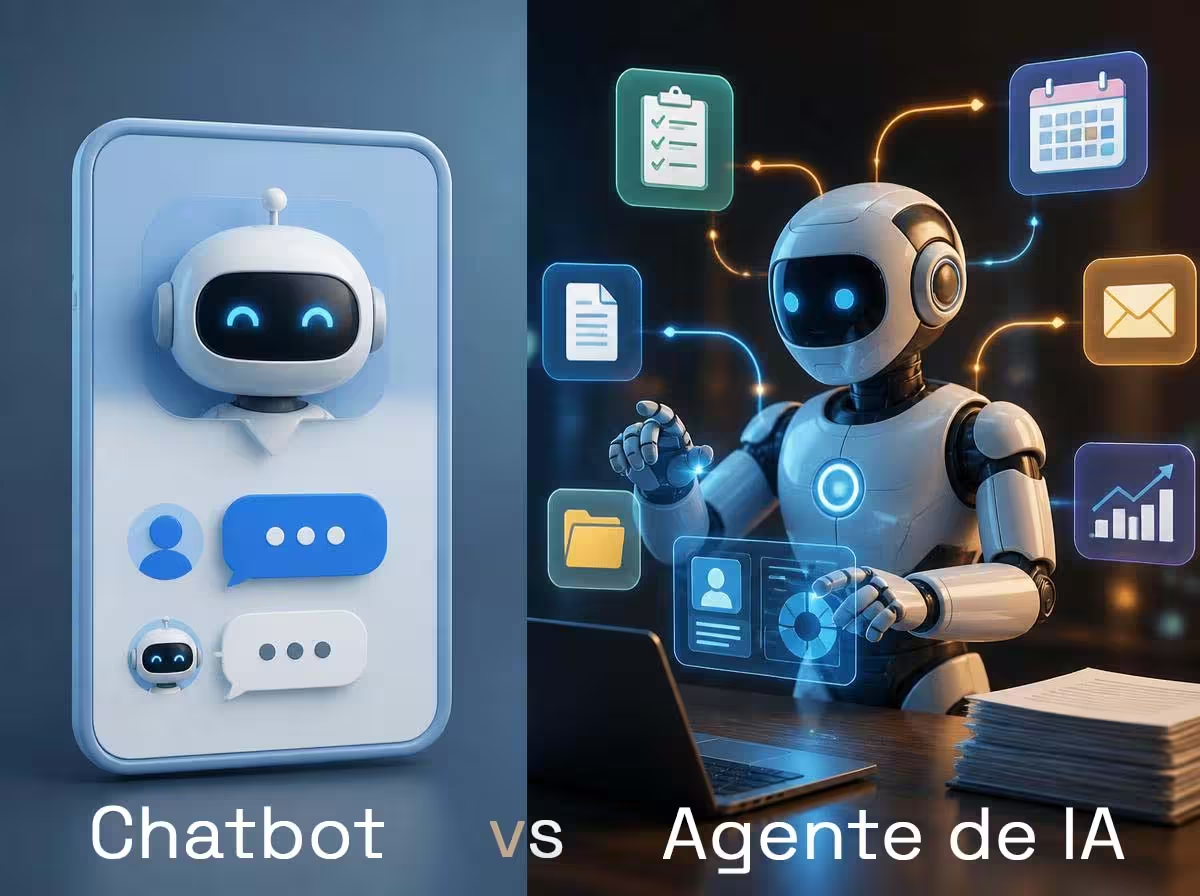
In tech podcasts, corporate webinars, and software sales pitches, deciding between a chatbot or ai agent is crucial. You will hear the terms used interchangeably: “chatbot” and “AI agent”. To the casual observer, both feature a conversational text box, both run on neural language models, and both respond politely when you type a question.
In real-world computing, however, the gap between a chatbot and an AI agent is as vast as the difference between a reference dictionary and an autonomous executive assistant. Confusing the two leads individuals and businesses to waste money on overpriced software or select tools incapable of solving their workflow bottlenecks.
In this guide, we demystify the technical and operational differences between chatbots and autonomous agents with clear, everyday analogies—no engineering jargon, and no hype.

What Is a Chatbot, in Practice?
A chatbot is fundamentally an information retrieval and conversational interface. Whether powered by rigid decision trees (like legacy customer support widgets) or sophisticated neural transformers (like default ChatGPT), its core mechanic is reactive: you provide input, and it provides an output.
The defining limitation of a traditional chatbot is that it talks, but it does not act outside the conversational chat stream. If you ask a chatbot: “What flights leave from Miami to São Paulo on Friday?”, it will generate a helpful list of flight times. But it cannot open your credit card, navigate the airline booking portal, purchase the ticket, and sync the reservation into your Apple Wallet unless you manually command and oversee each microscopic step.
Think of a chatbot as a knowledgeable retail clerk standing behind a counter: they know the product catalog by heart, but they will never leave the counter to pack the box, hire a courier, and ship the product to your door.
What Makes an AI Agent Fundamentally Different?
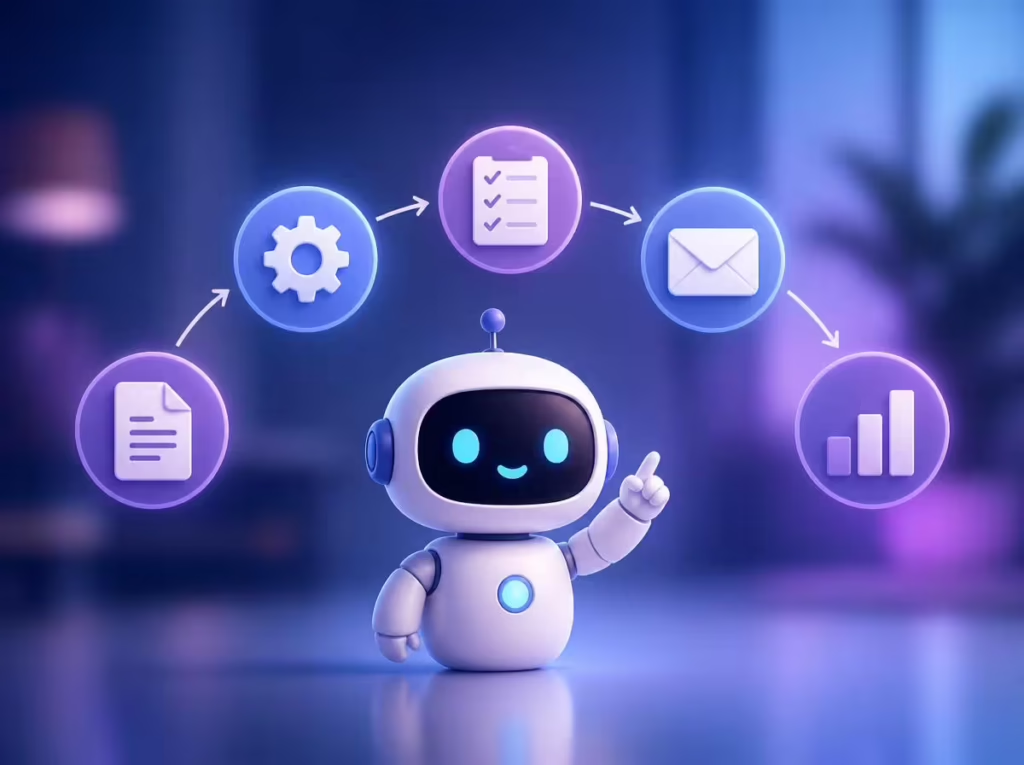
An AI agent takes a monumental cognitive step forward: it possesses agency, planning, and tool-use capabilities. Instead of just answering questions, an agent is given a high-level goal and given the autonomy to orchestrate multi-step actions across external software environments to achieve that goal.
Returning to our flight example: given the goal “Book the cheapest morning flight to São Paulo and add it to my calendar”, an AI agent formulates a plan, calls an airline search API, compares fare classes, navigates the checkout page, executes the reservation within spending limits, and posts the confirmation into your Google Calendar without requiring your micro-management.
Chatbot or AI Agent: Direct Comparison Table and Core Differences
| Dimension | Conversational Chatbot | Autonomous AI Agent |
|---|---|---|
| Primary Function | Answers questions & generates text | Executes multi-step objectives |
| Autonomy Level | Low (Waits for every single prompt) | High (Iterates loops until goal is met) |
| Tool Access | Limited to chat window | Executes terminal code, APIs & browsers |
| Memory & State | Linear conversational context window | Persistent memory & environmental state |
| Error Profile | Isolated text hallucinations | Cascading errors across action steps |
| Setup Complexity | Zero to Low (Plug and play) | Medium to High (Requires sandboxing & auth) |
When Should You Upgrade from a Chatbot to an AI Agent?
More technology is not always better. Deploying an autonomous agent for simple tasks is like hiring a corporate legal firm to proofread a two-line grocery list.
Stick with a Chatbot if:
- You need quick answers, creative brainstorming, essay drafting, or document summarization.
- You want simple FAQ automation on your customer support portal or WhatsApp channel.
- The task requires one-off execution without interacting with external software.
Upgrade to an AI Agent if:
- Your task requires three or more sequential steps across different applications (e.g., scrape data from a site, format it in a spreadsheet, and email a summary).
- You need continuous, always-on monitoring (like auditing server health or tracking competitor pricing changes).
- You need an autonomous coding assistant that can run tests, inspect stack traces, and refactor codebases independently.
To see how autonomous agents navigate real web environments, read our breakdown of agentic AI browsers.
For enterprise system architectures, explore the IBM AI agent architectural whitepapers.
To take your practical workflow further, explore our hands-on guide on what AI chatbots are and how businesses deploy them.
Frequently Asked Questions
Is ChatGPT a chatbot or an AI agent?
In its baseline form, ChatGPT functions as a conversational chatbot. However, when equipped with web browsing, Code Interpreter, and custom GPT actions that call external APIs, it exhibits hybrid agentic behaviors.
Are AI agents more prone to catastrophic errors than chatbots?
Yes. Because agents take real-world actions (such as sending emails, deleting files, or spending funds), an error early in their planning chain can cascade into compounding unintended consequences. That is why human-in-the-loop verification remains vital for high-stakes actions.
💬 What Has Your Experience Been?
Have you started integrating autonomous AI agents into your business or personal workflow, or do you still find standard conversational chatbots more reliable? Share your perspective in the comments below! 👇