

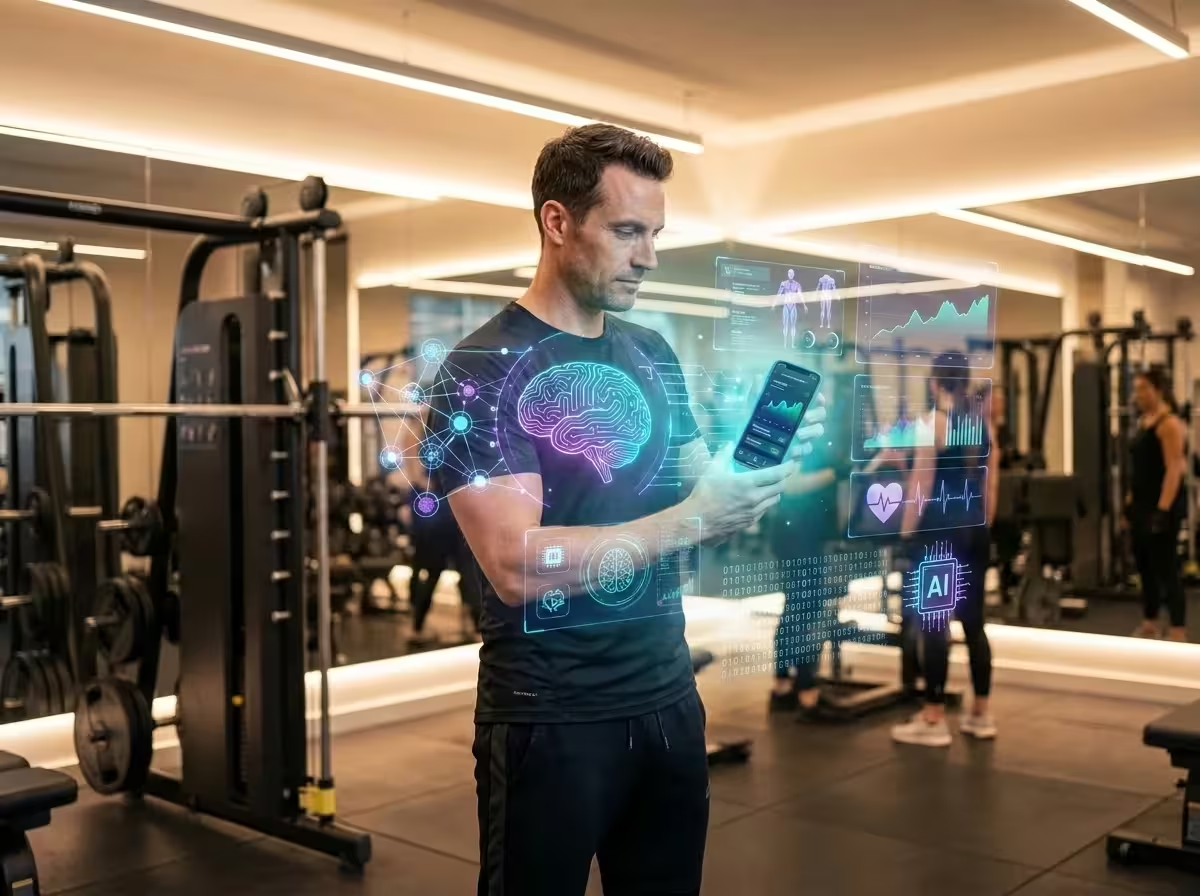
Integrating AI for personal trainers has rapidly evolved from an experimental novelty into an essential productivity accelerator for modern fitness coaches. If you spend hours typing spreadsheet cells, formatting periodization tables, and rewriting exercise descriptions late at night after back-to-back client sessions, modern language models offer a breakthrough solution.
Coaching fatigue is real. Manual program design drains substantial mental bandwidth that would be far better invested in correcting client movement mechanics, expanding your roster, or resting between demanding training blocks.
By learning how to prompt intelligent language models effectively, you can cut program drafting time down to minutes while safeguarding clinical biomechanics and physiological progression. If you want to explore foundational prompt techniques, review our curated collection of ready-to-use AI prompts designed for business workflows.
How AI for Personal Trainers Streamlines Program Design
Before examining hands-on prompt structures, a fundamental professional boundary must be clarified: artificial intelligence does not replace certified exercise physiologists. A language model operates as a lightning-fast data processor and layout assistant, but it possesses zero physical awareness.

ChatGPT cannot visually detect lumbar hyperextension during a Romanian deadlift, evaluate asymmetrical pelvic shift on a squat descent, or deliver the empathetic psychological encouragement that turns a struggling client into a lifelong achiever.
The winning dynamic lies in combining human clinical expertise with computational formatting speed:
[Comprehensive Client Intake & Physical Assessment] + [Generative Assistant for Drafting] = [Rapid, Evidence-Based Custom Prescription]
The Augmented Coaching Formula
The ultimate technical responsibility, load progression, exercise selection, and biomechanical validation remain entirely yours. The software simply handles the laborious drafting and cell formatting that steals your free time.
The Anatomy of a Biomechanically Sound Fitness Prompt
If you enter a vague prompt such as “write a 4-day gym workout”, an AI model will generate a bland, generic routine pulled from forum archives. However, when you supply rigorous exercise physiology variables, the output transforms into an elite training framework.
To produce exceptional training spreadsheets, ensure your prompts incorporate these key clinical data points:
- Client Biomarkers & History: Age, biological sex, training age, and weekly activity profile.
- Primary & Secondary Goals: Hypertrophy, maximal strength, fat loss, athletic conditioning, or joint rehabilitation.
- Weekly Frequency & Split: Number of available training days and targeted split model (Upper/Lower, Push/Pull/Legs, or Full Body).
- Orthopedic Restrictions & Joint Pain: Patellofemoral friction, lumbar disc herniation, shoulder impingement, or limited ankle mobility.
- Equipment Constraints: Commercial health club, boutique kettlebell studio, home garage gym, or bodyweight travel protocol.
Four-Step Masterclass: Generating Flawless Workout Routines
Follow this exact four-step methodology to integrate conversational assistants into your weekly coaching workflow without compromising exercise safety.
Step 1: Conduct a Comprehensive Physical Intake
Never bypass your initial assessment. Gather all relevant postural screens, mobility tests, cardiovascular metrics, and personal schedule limitations beforehand. The richer your intake data, the sharper the algorithm’s drafting accuracy.
Step 2: Calibrate the Assistant’s Persona
Prime the conversational tool with professional coaching parameters before sending client details. This ensures the output adheres to accredited exercise physiology standards:
You are an expert exercise physiologist and strength and conditioning specialist credentialed under NSCA and ACSM standards. Your mission is to help me format and structure individualized workout periodization for my personal training clients.

Every prescription must respect biological individuality, appropriate weekly set volume per muscle group (typically 10-18 weekly sets for intermediate hypertrophy), motor unit recruitment principles, and reported orthopedic restrictions.

Do not generate a workout yet. Acknowledge this role by replying with: "Understood, Coach. I am ready for the client intake profile."
Step 3: Submit the Client Profile & Structured Instructions
Once the assistant acknowledges your framework, input the client profile using this production-tested prompt:
Based on your exercise physiologist persona, construct a complete weekly training program for this client profile:

- Demographics: [Female, 34 years old]
- Experience Level: [Intermediate - consistent resistance training for 14 months]
- Primary Objective: [Lower-body hypertrophy with posterior chain emphasis]
- Weekly Availability: [4 days: Monday, Tuesday, Thursday, Friday - 60 minutes per session]
- Desired Split: [Upper / Lower 2x: Day A (Lower Body), Day B (Upper Body & Core)]
- Orthopedic Notes: [Mild left patellofemoral irritation under deep knee flexion. Avoid deep free barbell back squats.]
- Equipment Access: [Full commercial fitness facility]

Formatting Guidelines:
1. Present each day in a clean MARKDOWN TABLE.
2. Columns must include: Exercise Name | Working Sets | Repetition Range | Target RPE (6-10) | Rest Interval | Biomechanical / Coaching Cue.
3. Include dynamic warmup routines targeting hip and ankle mobility before Lower sessions.
4. Keep total weekly working sets for quadriceps and glutes within 12-16 high-quality sets.
Step 4: Professional Audit and Biomechanical Adaptation
As soon as the table populates, your indispensable clinical audit begins. Aligning with evidence-based exercise guidelines published by the American College of Sports Medicine (ACSM) and the National Academy of Sports Medicine (NASM), review the program against three vital criteria:
- Does exercise sequencing place high-threshold compound movements before single-joint isolations?
- Are joint shear forces minimized for the client’s documented orthopedic sensitivity?
- Is systemic fatigue balanced across consecutive training days to ensure systemic recovery?
If an exercise selection seems sub-optimal, command an instant modification: “Swap the free barbell walking lunges for an inclined leg press with high and wide foot placement to eliminate knee shear.” The system will update the table in seconds.
Comparative Matrix: Traditional Spreadsheet Drafting vs. AI-Assisted Coaching
Examine how deploying generative drafting transforms day-to-day coaching operations:
| Operational Metric | Manual Method | AI-Assisted Workflow |
|---|---|---|
| Drafting Time per Program | 45 to 60 minutes | 5 to 10 minutes (including audit) |
| Table & Cell Formatting | Tedious manual cell entry | Instant clean table generation |
| Exercise Substitutions | Mental search and manual lookup | Instant biomechanical alternatives |
| Online Roster Scalability | Capped at 15-20 clients | Scalable to 50+ clients without fatigue |
| Primary Coaching Focus | Administrative data entry | Client connection and movement analysis |
Ready-to-Use Emergency Prompts for Daily Coaching Challenges
Beyond initial program creation, generative assistants resolve unpredictable training scenarios on the gym floor:
1. Instant Equipment Availability Swap:
My client is in a crowded gym and cannot access the Hack Squat machine. Recommend 3 biomechanically equivalent alternatives targeting the vastus medialis and lateralis while minimizing lumbar axial loading.2. Rapid Travel Hotel Workout Adjustment:
My advanced client is traveling for 7 days with zero gym access. Design a 30-minute high-density Full Body bodyweight session using timed tempo contractions (3-1-3) and mechanical drop sets to preserve muscle mass.3. Clear Client-Facing Technique Explanations:
Explain the concept of 'Rest-Pause Training' in engaging, crystal-clear language that I can send as an encouraging WhatsApp voice note script to a beginner client who feels intimidated by lifting heavy.Essential Safeguards: Preventing Algorithmic Mistakes in Fitness
To preserve your professional reputation and student safety, adhere strictly to these operational guardrails:
- Never Deliver Unedited AI Text: Always review exercise nomenclature. Language models occasionally invent confusing workout names or prescribe overlapping movement angles.
- Maintain Client Privacy: Never input confidential patient records, full names, or payment details into public chat windows. Use anonymized identifiers like “Client A”.
- Progressive Overload Demands Human Feedback: Algorithms cannot sense daily fatigue, poor sleep quality, or mental burnout. Real coaching adjustments require genuine human listening.
When you master automated administrative systems, you can also deploy automated communication flows to handle prospective client questions—learn how in our comprehensive walkthrough on business automation tools.
Frequently Asked Questions
Will conversational models replace certified fitness trainers? No. While language models excel at organizing exercise databases and formatting charts, they lack sensory perception, kinetic movement analysis, and emotional intelligence. High-value coaching relies on human accountability.
Can AI for personal trainers completely replace coaching intuition? Absolutely not. Machine learning models cannot observe real-time joint angles, assess kinetic chain breakdowns, or provide empathetic verbal encouragement during an exhausting set.
Can you build comprehensive periodization tables using free AI tiers? Yes. Free conversational engines like ChatGPT-3.5/GPT-4o mini and Google Gemini handle table creation, exercise variation swaps, and workout formatting with exceptional proficiency.
How many online coaching clients can a trainer manage with AI assistance? By reducing program drafting from 50 minutes to under 10 minutes per client, independent trainers regularly scale from 15 remote clients to upwards of 40 without experiencing burnout.
What is your favorite coaching prompt trick?
Are you already using generative assistants to design workout sheets, or are you still relying on manual spreadsheets? Let us know in the comments below, and share which prompt technique you are planning to test with your clients! 👇