
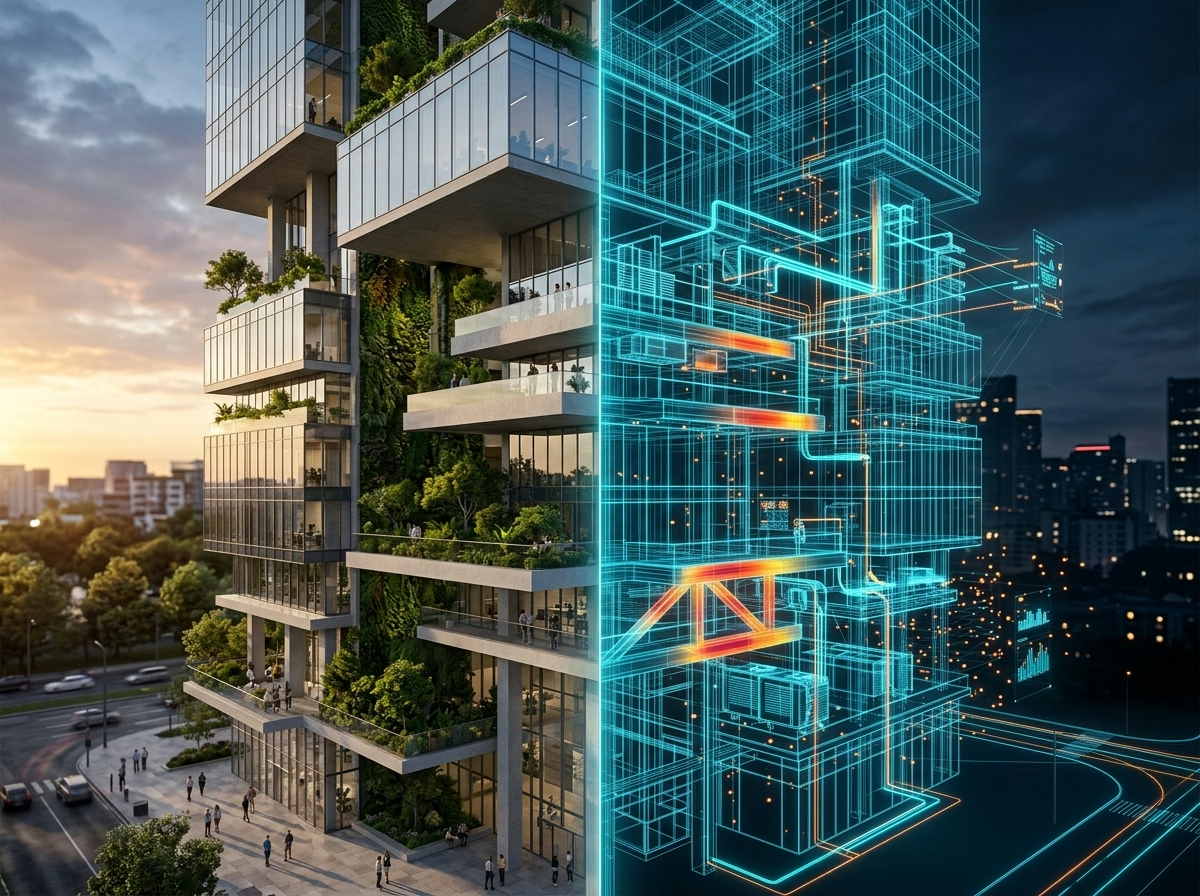
Picture stepping onto an active construction site free from crinkled paper blueprint rolls and heated arguments because a plumbing pipe crashed directly through a load-bearing concrete beam. Now imagine something even more profound: a commercial skyscraper that functions not as passive steel and glass, but as a living organism that monitors its own ambient thermal load, detects elevator mechanical fatigue before failure, and modulates natural daylighting to reduce building energy consumption by up to 30%. That technological leap is already here and reshaping global infrastructure: the convergence of IoT telemetry, machine learning, and digital twins in civil engineering.
For decades, construction bore the reputation—often justified—of being one of the slowest, most analog sectors of the modern economy. While automotive and aerospace manufacturers evaluated aerodynamic virtual prototypes in wind tunnels throughout the 1980s, commercial jobsites still relied heavily on static spreadsheets, manual field surveys, and improvised on-site masonry adjustments. But the moment virtual architectural models evolved into dynamic computational replicas communicating with physical walls in real time, the civil sector crossed firmly into the digital age.
What Is a Digital Twin (And Why It Is Far More Than a 3D Model)?
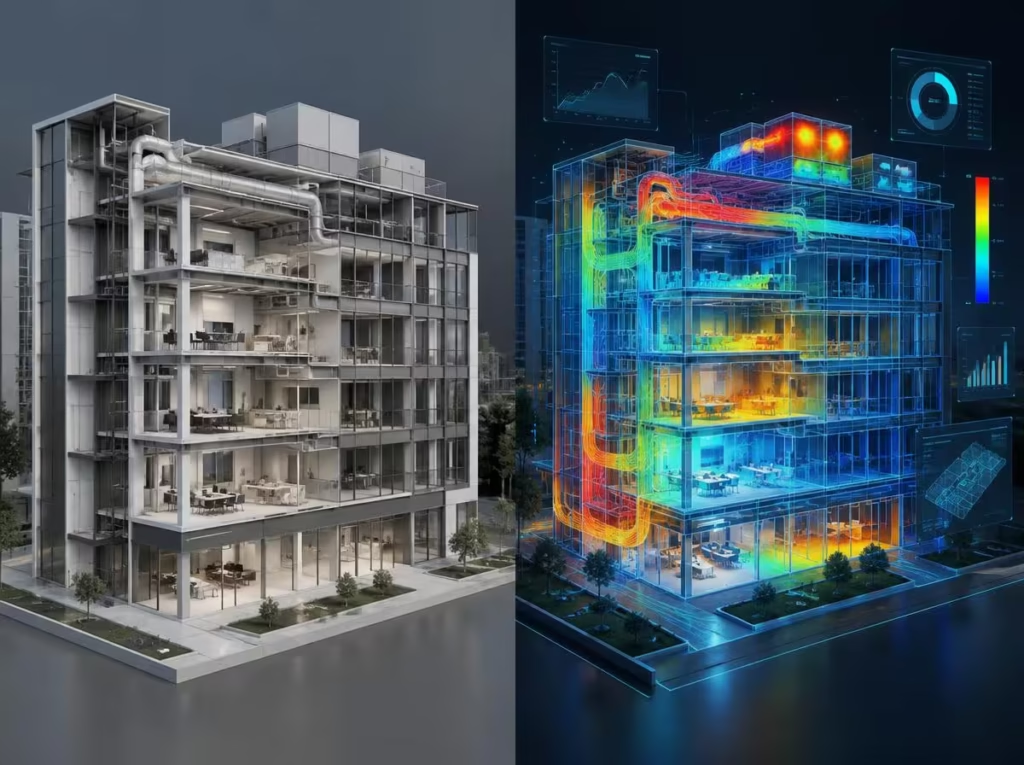
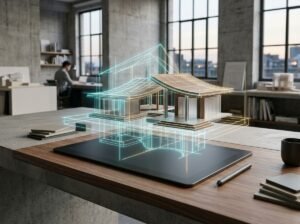
The most frequent misconception among newcomers is assuming a digital twin is merely a hyper-realistic architectural 3D rendering used by developers in marketing brochures to woo prospective tenants. In reality, the difference between a static 3D rendering and an authentic digital twin is the exact gulf between a wax statue and a living, breathing person.
Traditional CAD models are frozen in time. They document where a wall was originally drawn, but possess zero awareness of what transpires once concrete cures. An authentic digital twin is a living computational replica tethered to the physical asset through an unbroken bidirectional data highway:
- The Physical Asset: The commercial high-rise, suspension bridge, highway corridor, or sports stadium embedded with dense arrays of IoT sensors tracking vibration, thermal gradient, humidity, acoustic stress, and pedestrian occupancy.
- The Telemetry Pipeline: These connected edge sensors transmit second-by-second telemetry directly into cloud analytic repositories.
- The Analytical AI Core: Machine learning algorithms process this data volume, executing predictive simulations: “If external ambient temperatures climb 7°F over the next hour and lobby foot traffic surges, south-wing HVAC chiller loops will experience thermal throttling at 3:15 PM.” The system notifies facility engineers while autonomously modulating hydraulic dampers to avert peak electrical tariffs.
This operating philosophy mirrors the broader technological shift we explored regarding how foundational AI models work quietly in the background to optimize physical systems without requiring manual human oversight at every operational turn.
The Asset Lifecycle: From Virtual Design to Active Jobsite
To grasp the bottom-line financial impact in modern construction, consider the three distinct operational phases of a project powered by digital twin engineering:
1. Design Stage: Algorithmic Clash Detection
Historically, structural engineers engineered support beams in one isolated CAD suite, mechanical contractors drafted ventilation ducting in another, and electrical teams routed high-voltage conduits in a third. Once crews mobilized on-site, costly conflicts were guaranteed: plumbing lines puncturing shear walls and air shafts obstructing rated fire corridors. On-site change orders and demolition ran up millions in budget overruns.
Through modern Building Information Modeling (BIM) protocols championed by organizations like buildingSMART International, the digital twin is born before the first foundation pile is driven. Multi-disciplinary models execute automated clash detection sweeps. If a fire suppression sprinkler line collides with structural rebar on the 14th floor, the model surfaces the conflict and computes an optimal millimeter adjustment inside the virtual workspace.
2. Construction Execution: Drone Telemetry and LiDAR Auditing
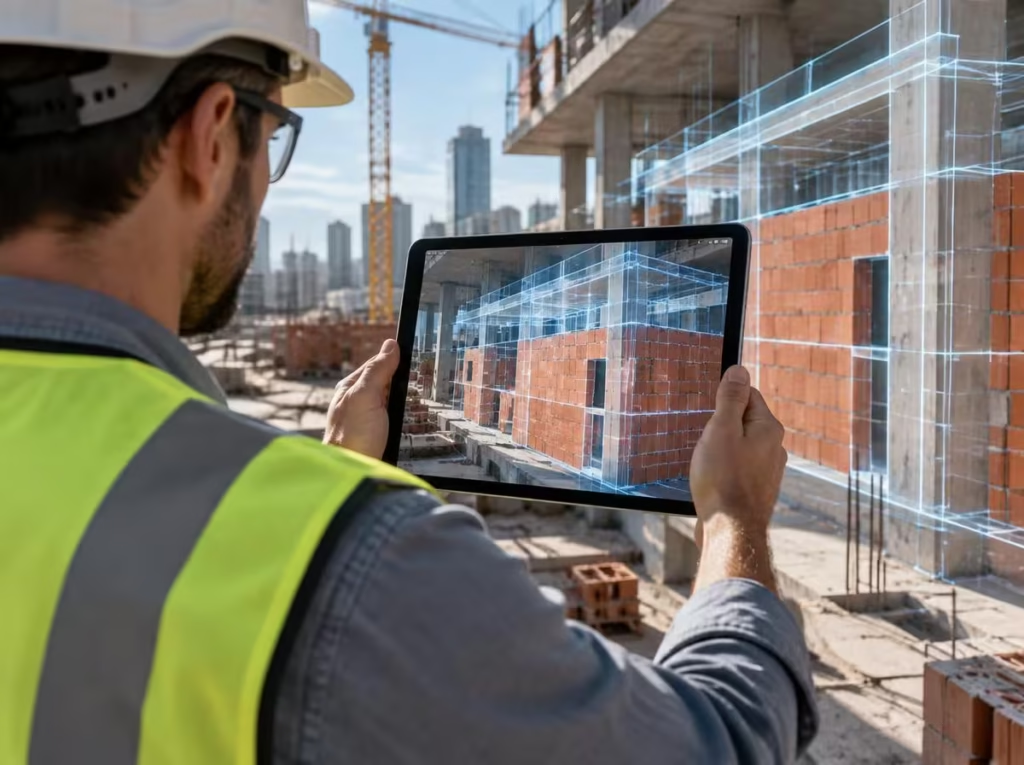
During active construction, the digital twin serves as a live project overseer. Weekly autonomous drone flights outfitted with LiDAR laser scanners capture high-density point clouds across active decks. Computer vision pipelines overlay this scan against the master engineering model.
The output is a real-time diagnostic audit: the software highlights if a poured concrete slab drifted half an inch out of plumb, calculates whether bulk concrete inventories match pouring schedules, or signals when progress milestones deviate from budgeted Gantt timelines. Much like automating analytical data pipelines in modern AI-driven operational workflows, guesswork is eliminated in favor of empirical reality.
The Big Payoff: Facilities Management and Long-Term Operations
Here is an eye-opening industry metric: approximately 80% of a commercial building’s total lifecycle cost occurs during ongoing daily operations (utilities, preventive maintenance, structural repairs, and mechanical retrofits)—not during physical construction.
This operational window is where digital twins yield their greatest return on investment. Rather than waiting for a basement water pump to fail catastrophically and flood subterranean parking levels, facility managers practice genuine predictive maintenance:
- Acoustic Vibration Diagnostics: Acoustic sensors flag subtle harmonic deviations in elevator motors, dispatching maintenance contractors two weeks before mechanical bearings seize.
- Dynamic Emergency Egress: In a fire scenario, the digital twin calculates safe evacuation routes in real time based on active smoke sensor densities, securing fire doors to starve oxygen while routing building occupants via mobile push alerts.
Global Standards and Real Estate Economics
Digital twin adoption is accelerating rapidly across major metropolitan markets from Singapore and London to New York and São Paulo. Commercial real estate investment trusts increasingly mandate digital twin capabilities prior to capital acquisition.
The driver is straightforward capital efficiency: buildings powered by autonomous facilities management record lower operational expenses, attract multinational corporate tenants willing to sign premium leases, and easily achieve green building accreditations (such as LEED and WELL) that enhance square-foot asset valuations by up to 25%.
While smaller subcontractors and residential renovations still grapple with sensor hardware amortization, the precipitous decline in IoT silicon costs—tracked closely by engineering standard bodies like IEEE—is democratizing digital twin frameworks for mid-tier residential properties.
Frequently Asked Questions (FAQ)
What is the core distinction between BIM and a Digital Twin?
BIM (Building Information Modeling) serves as the detailed structural database of design intent, cataloging 3D geometry and material specifications. A Digital Twin represents the next evolutionary stage: it connects that finished BIM model to real-world IoT sensors and machine learning inference, enabling the virtual replica to react dynamically to live operational conditions.
Can engineers build a digital twin for an existing legacy building?
Yes. Through a workflow known as Scan-to-BIM, engineers deploy portable LiDAR 3D scanners inside the building to capture millimeter-accurate point clouds of the existing architecture. Crews then mount non-invasive wireless IoT sensors across critical infrastructure (pumps, electrical switchgear, roofing) to instantiate a digital twin without tearing down walls.
Will digital twins replace civil engineers and architects?
No. Digital twins do not replace technical judgment, ethical responsibility, or structural design ingenuity. Instead, they eliminate manual clerical chores (such as hand-measuring expansion cracks with calipers or drafting field reports), transforming engineers into high-leverage strategic asset directors.
The Smart Infrastructure Frontier
As individual facilities come online with autonomous digital twins, the next frontier is urban-scale interconnection. Cities including Helsinki, Singapore, and London are federating municipal building models into Urban Digital Twins: macro-simulations that forecast stormwater flooding, optimize real-time transit routing, and balance electrical grid resilience before outages occur.
Civil engineering, once characterized primarily by concrete formwork and steel placement, has permanently transformed into a data-driven discipline. Teams that learn to construct and simulate in the digital realm first will build vastly safer, more sustainable, and cost-effective infrastructure in the physical world.
Have you encountered BIM workflows or smart digital twins in your engineering projects or commercial property? Do you see automated facilities management becoming standard for commercial spaces? Share your thoughts and questions in the comments below!