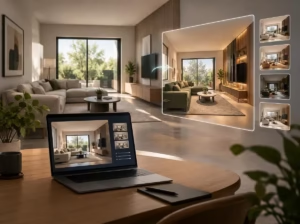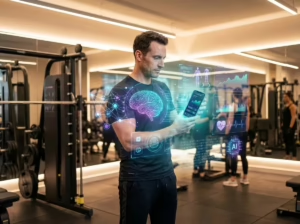

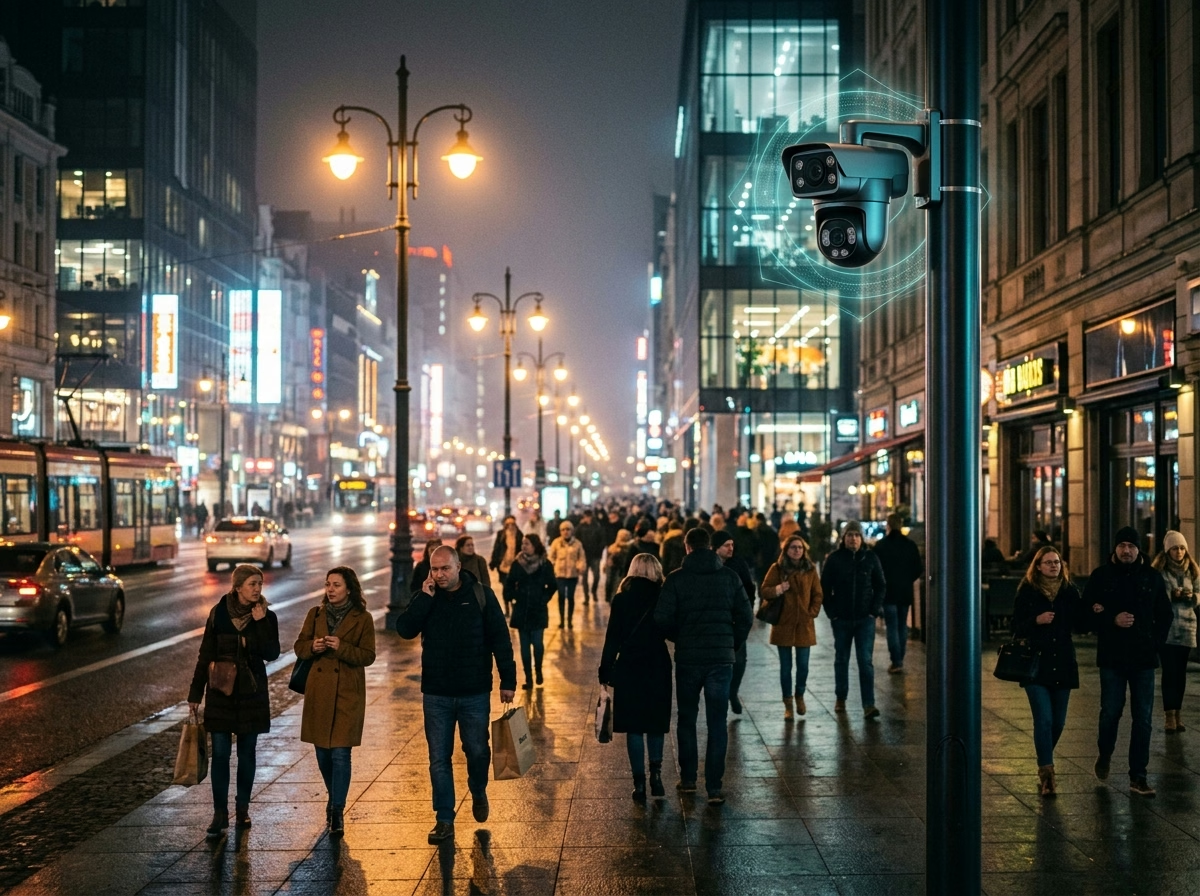
You leave your apartment building in the morning, glance casually at the smart optical scanner mounted beside the access turnstile, walk toward the subway platform beneath high-resolution surveillance totems, and step into a corner pharmacy where a self-checkout kiosk surfaces personalized promotions before you even type your loyalty number. No alarms chime and no physical documents change hands, yet in fractions of a second, your skeletal facial geometry has been measured, tokenized, and cross-referenced against distributed cloud databases. The exponential expansion of AI cameras and the friction between facial recognition and privacy have moved beyond dystopian cinema to become the silent, ambient infrastructure governing modern civic life.
The institutional promise is undeniably attractive: lower municipal crime rates, seamless airport transit lines, swift apprehension of fugitives in dense crowds, and the frictionless convenience of never carrying plastic keycards or physical fobs. Yet beneath this veneer of high-tech efficiency lies hazardous ground. When your own biological face becomes your universal master password to physical reality, what happens when computer vision models fail? More crucially: where does your biometric faceprint travel once the camera sensor goes dark?
What Happens in Milliseconds: From Raw Pixels to Mathematical Vectors
To understand why biometric surveillance stirs both technological enthusiasm and profound civil liberties anxiety, we must dismantle the intuition that an optical lens “sees” you the way a human being does. The computer vision model remains indifferent to your fashion choices, hair styling, or whether you look tired on a rainy morning. To neural models, as explored in our primer on how artificial intelligence processes visual tokens, your face is purely a geometric lattice of statistical probabilities.
The pipeline executes across four instantaneous algorithmic phases that complete faster than a human eyelid flutter:
- Face Detection: The optical sensor ingests the real-time video stream, scanning each frame for bounding coordinates that delineate human facial topology (the classic triangular geometry formed by pupil centers and the nasal tip). At this initial gate, the algorithm simply records: “a human face is present here.”
- Biometric Landmark Mapping: Next, the neural network projects dozens of nodal reference points across the contours of the face. It calculates the exact interpupillary distance, jawline curvature, nasal bridge width, cheekbone depth, and ocular socket contours.
- Faceprint Vectorization: These biological dimensions are translated into a normalized mathematical vector—a unique facial fingerprint expressed in binary floating-point values. It is this compact mathematical string that traverses corporate networks, rather than high-resolution raw JPEG images.
- Database Matching and Classification: Finally, the system compares that vector against existing reference registries. If statistical similarity exceeds a preconfigured confidence threshold (such as 92%), an access lock releases, a personalized ad renders, or law enforcement monitors trigger an alert.
The Rapid Spread: From Municipal Smart Cities to Retail Checkout Aisles
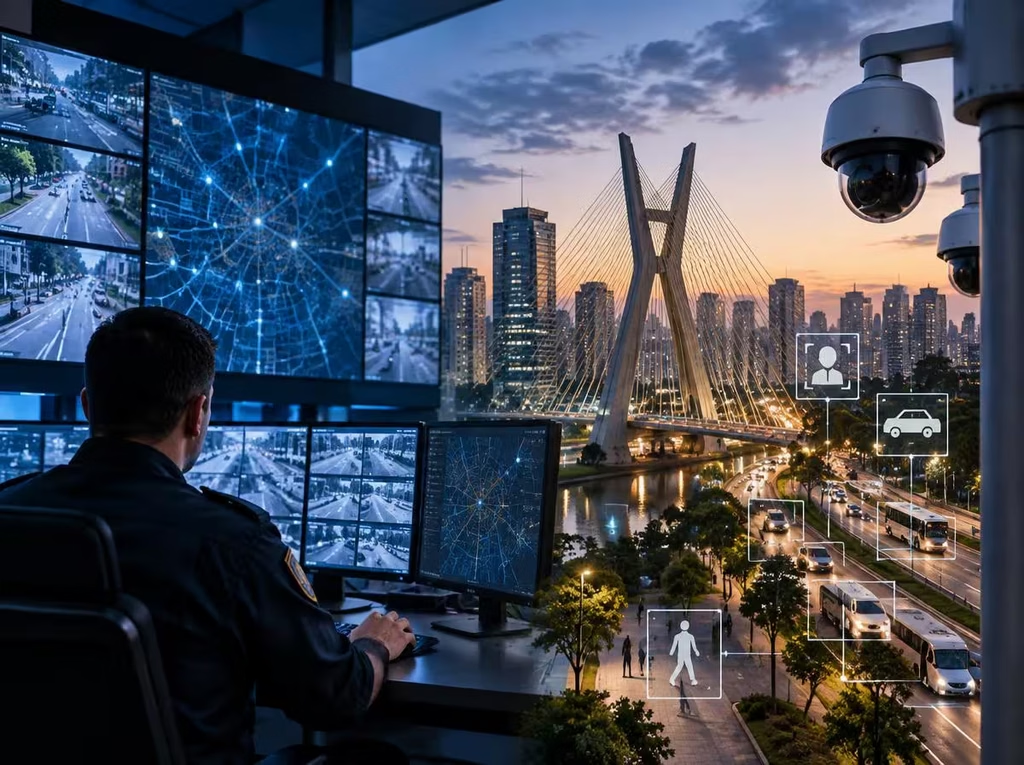
Across urban centers worldwide, municipal governments and private enterprises are rapidly deploying smart vision infrastructure. Massive public monitoring programs deploy tens of thousands of connected cameras synced with outstanding warrant registries and traffic oversight networks.
Simultaneously, the private commercial sector has identified massive operational cost reductions in biometric monitoring. Commercial properties and residential complexes have phased out traditional concierges and RFID fobs in favor of facial kiosks. Pharmacy and grocery chains experiment with customer biometrics at self-checkout registers, citing fraud reduction and loyalty convenience.
Yet the essential question remains largely unresolved: who stores these biometric faceprints, and under what cybersecurity hygiene? A compromised account password can be invalidated and updated in two minutes via multi-factor SMS. But if your biological faceprint leaks from a third-party property management vendor, you cannot simply reset your physical face.
The Threat of Algorithmic False Positives and Biased Training Sets
Proponents of unchecked video surveillance often proclaim the objective neutrality of algorithms. After all, neural weights and processors harbor no personal human prejudices, right? In production environments, reality demonstrates the opposite. Computer vision models are trained on historical image libraries that carry profound demographic imbalances.
Exhaustive benchmark studies by the National Institute of Standards and Technology (NIST FRVT) have repeatedly revealed that commercial facial recognition algorithms exhibit error rates up to one hundred times higher when evaluating Black individuals, women, and marginalized demographic cohorts compared to middle-aged Caucasian males.
In municipal deployments, these statistical discrepancies trigger real-world human catastrophes. Civil rights investigations show innocent citizens misidentified by automated camera alerts, subjected to traumatic public stops by armed officers, and detained for hours before authorities verify human error. Similar to the identity fraud patterns we analyzed regarding AI recruitment scams and synthetic avatars, automated tools often struggle with subtle contextual reality when operating at mass scale.
Biometrics as Sensitive Data: What Global Privacy Laws Demand
Many pedestrians assume that simply walking through public spaces or retail stores strips them of legal protections over their image. Under modern privacy frameworks—including the European Union’s GDPR, Brazil’s LGPD, and state statutes like Illinois’ BIPA—biometric templates are legally categorized as sensitive personal data.
This statutory classification imposes stringent regulatory duties on operators:
- Proportionality and Alternative Access: A private facility or residential association cannot mandate biometric enrollment if less intrusive security mechanisms (such as keycards, physical fobs, or numeric keypads) accomplish equivalent security objectives.
- Mandatory Transparency: Data subjects hold the right to know exactly which corporate entity collects their facial vectors, where files reside, retention durations, and which commercial or governmental affiliates maintain access.
- Prohibition on Secret Commercial Brokering: Utilizing facial tracking to build unconsented consumer behavior profiles and selling pedestrian mobility patterns to commercial advertisers is strictly unlawful without unambiguous, opt-in consent. As emphasized by digital rights groups like the Electronic Frontier Foundation (EFF), biometric tracking demands strict democratic safeguards.
Self-Defense Guidelines: 4 Ways to Shield Your Biometric Rights
Navigating a sensor-saturated metropolis can trigger a sense of powerlessness. Nevertheless, citizens and consumers possess practical and legal avenues to assert boundaries against pervasive tracking:
- Request Alternative Access at Your Residence: If your residential complex votes to install facial recognition turnstiles, formally request an alternative credential (such as a numeric PIN or physical RFID fob). Data protection regulations protect your right to refuse mandatory facial mapping for basic property access.
- Decline Facial Capture at Retail Point-of-Sale: Be cautious when retail kiosks or loyalty checkout screens request facial scans in exchange for minor promotional discounts. Standard phone numbers or barcode cards satisfy customer rewards without surrendering biometric identity.
- Look for Clear Environmental Signage: Commercial venues deploying AI cameras are legally required in most jurisdictions to display conspicuous signage notifying entrants that active biometric processing is underway.
- Exercise Your Right to Biometric Erasure: If you enrolled your face in mobility, ride-share, or enterprise platforms you no longer frequent, contact their data privacy officer to formally demand the permanent deletion of your stored biometric templates. As highlighted in our breakdown of how hidden digital vectors compromise user data, minimizing retained digital records is foundational security hygiene.
Frequently Asked Questions (FAQ)
Can landlords mandate facial scans for building entrance?
No. While property managers may adopt facial recognition systems, they cannot legally deny building access to tenants or owners who decline biometric capture. They must maintain a functional, non-discriminatory alternative, such as a traditional keycard or physical key.
Can AI cameras identify individuals wearing protective masks or sunglasses?
Yes, with high statistical confidence. Modern vision models have been fine-tuned to rely on visible upper-facial nodal landmarks—including orbital bone sockets, eyebrow geometry, and forehead texture. Advanced surveillance systems also incorporate gait analysis (the unique cadence and stride of how an individual walks) to reinforce identification.
Do anti-surveillance makeup patterns effectively fool AI cameras?
Avant-garde concepts like CV Dazzle use high-contrast geometric makeup and infrared LED clothing to disrupt facial detection nodes. While scientifically valid in controlled tests, these techniques draw significant human attention in everyday urban public transit, making them impractical for standard daily routines.
The Fragile Border Between Community Safety and Mass Surveillance
Technology itself is neither inherently virtuous nor malicious: it is an amplifier of human observation and institutional leverage. Few dispute the value of rapidly intercepting violent suspects or streamlining airport congestion. The ethical dilemma emerges when societies incrementally forfeit privacy and bodily anonymity in exchange for the minor convenience of not retrieving a key from a pocket.
Defending biometric privacy is never about having “something to hide”—it reflects the mature understanding that personal freedom is a cornerstone of an open society. The smart cities of tomorrow can be technologically advanced, but they must never become blind to the fundamental civil liberties of the citizens who sustain them.
How do you feel about facial recognition kiosks appearing in your apartment building, gym, or local grocery store? Do you feel safer or more uneasy when cameras track your movement? Share your perspective in the comments below!