

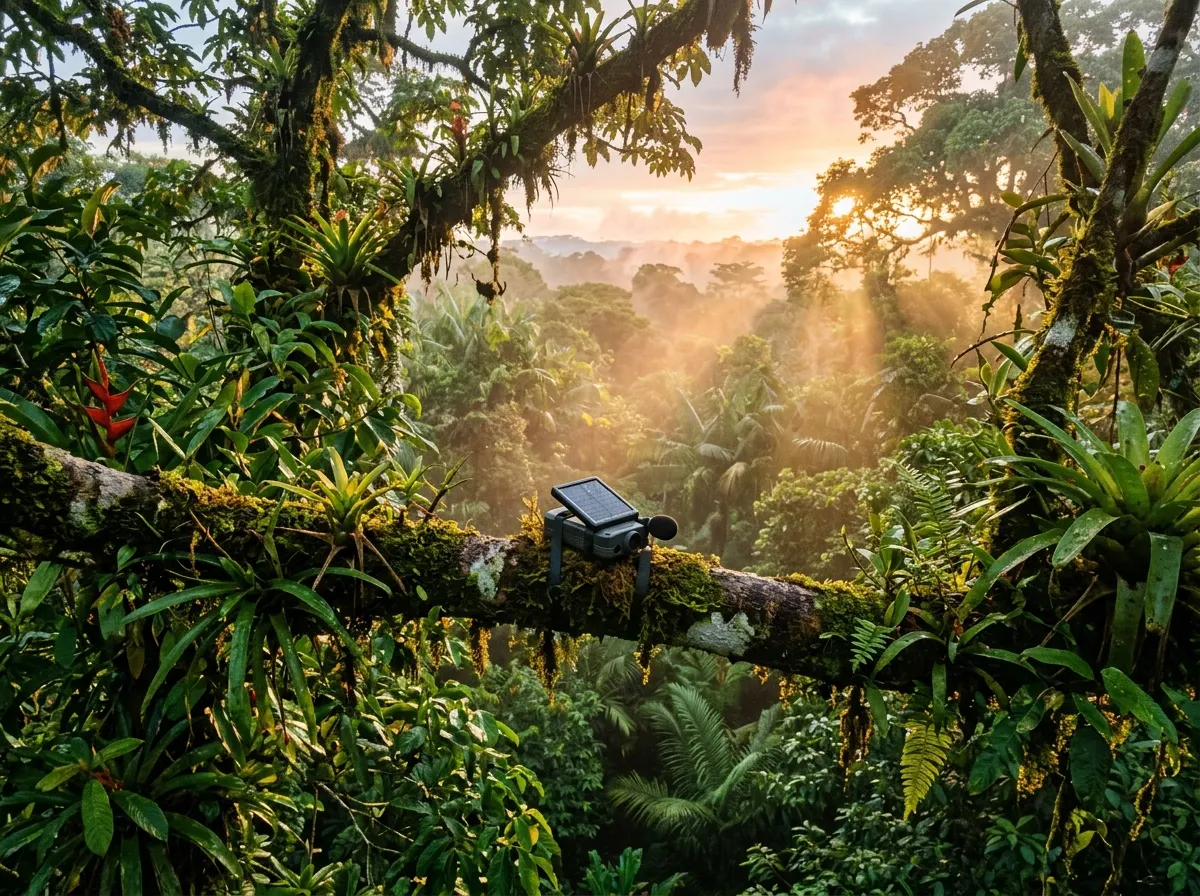
Deep inside the dense canopy of the Amazon rainforest, silence is an illusion. The jungle vibrates with a deafening symphony: the shrill chirps of tree frogs, the screech of howler monkeys, the heavy drum of tropical rainfall, and the relentless hum of millions of cicadas. But beneath this ancient ecological chorus, a sinister, mechanical intrusion often lurks undetected: the distant drone of an illegal chainsaw or the low rumble of an unpermitted logging truck.
Covering over 2.6 million square miles, patrolling the Amazon basin with traditional human rangers or satellite imagery alone is a logistical impossibility. Clouds routinely obscure optical satellites, and by the time deforestation is visible from orbit, centuries-old mahogany trees are already on timber trucks. Today, an extraordinary technological alliance is turning the tide: AI guarding the Amazon through bioacoustic neural networks that listen to the forest in real time.
How Neural Networks “See” with Acoustic Ears
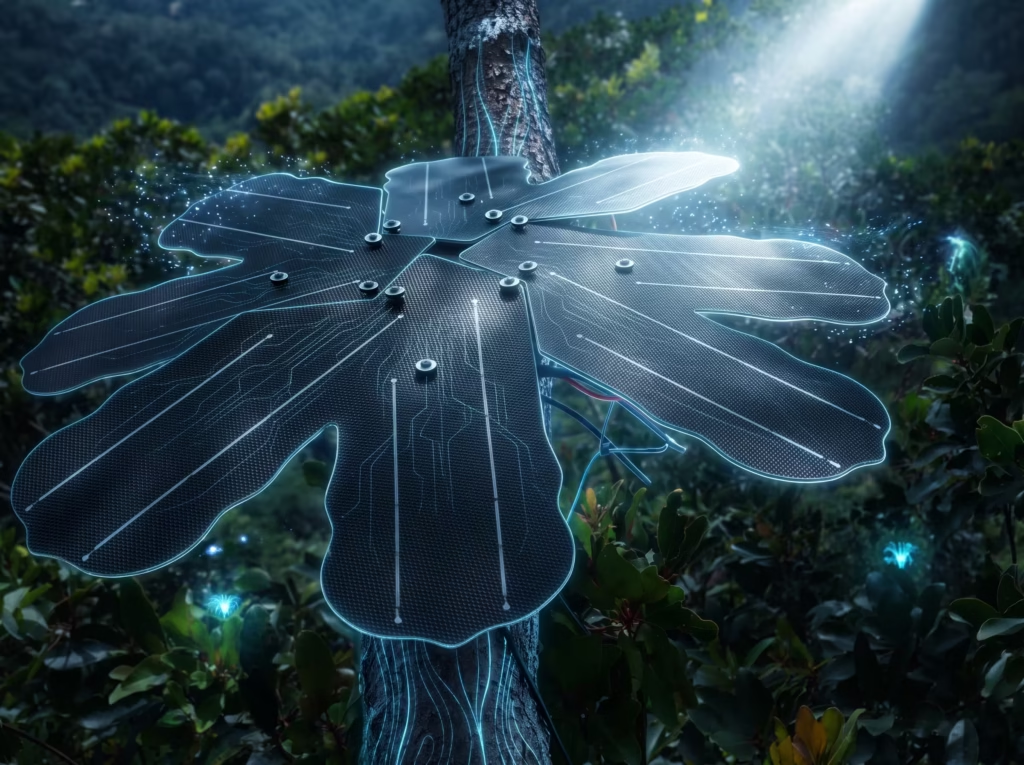
How does an artificial intelligence system isolate the faint cough of a two-stroke motor miles away amid a chaotic rainforest soundscape? The breakthrough relies on converting sound waves into visual spectrograms—visual representations of acoustic frequencies plotted over time.
Once converted into an image, the audio is analyzed by deep Convolutional Neural Networks (CNNs), the exact same architecture used in medical imaging and facial recognition. The neural model scans the spectrogram for the distinctive visual “fingerprint” of mechanical saws, gunshots, and diesel engines, filtering out thunderstorm claps and screeching macaws with near-zero false alarms.
From Recycled Smartphones to Canopy Guardians: Rainforest Connection
The pioneer of this bioacoustic revolution is Rainforest Connection (RFCx). Founded by engineer Topher White, the project began with a brilliantly frugal insight: discarded Android smartphones, equipped with solar panels and high-gain omnidirectional microphones, could be mounted 100 feet up in tree crowns to serve as permanent listening sentinels.
Each unit, nicknamed a “Guardian,” streams continuous acoustic telemetry via cellular networks or satellite uplinks to cloud servers. The moment the AI identifies an illegal chainsaw signature, an automated alert containing precise GPS coordinates is pushed to forest rangers’ and Indigenous patrol teams’ smartphones in under three minutes.
The Sovereign Alliance: Technology in the Hands of Indigenous Protectors
Cutting-edge algorithms are useless without courageous people on the ground. In Brazil, RFCx partnered directly with Indigenous communities, such as the Tembe and Guajajara peoples, who serve as the frontline defenders of their ancestral territories.
Armed with real-time bioacoustic alerts, Indigenous forest guards intercept illegal loggers before irreversible destruction occurs. As highlighted in our previous exploration of AI in Brazilian Agribusiness & Land Monitoring, combining technological sovereignty with traditional stewardship provides the most resilient defense against illegal ecological exploitation.

Beyond Chainsaws: The Invisible Biodiversity Census
While stopping illegal logging is the urgent tactical mission, bioacoustics yields an equally transformative scientific byproduct: automated biodiversity mapping. Human biologists can only survey a fraction of the rainforest, often biased by visual sightings.
By training classifiers on thousands of distinct bird songs, amphibian mating calls, and jaguar vocalizations, AI systems calculate overall ecosystem health metrics. When a keystone species goes silent, algorithms flag ecological degradation weeks before visible tree loss occurs, empowering conservation scientists with unprecedented ecological resolution.
Edge AI vs. Cloud Latency: Computing Under the Green Ceiling
In conservation engineering, latency is a matter of life and death. If an illegal logging crew starts a commercial chainsaw, an ancient 400-year-old tree can be brought down in less than twenty minutes. If acoustic data had to be uploaded in batches over slow satellite connections to cloud data centers in North America, alert notifications would arrive hours too late.
Modern rainforest sensors utilize Edge AI processing. By quantizing convolutional acoustic models down to less than 15 megabytes, low-power microcontrollers analyze sound streams locally in real time. The hardware discards 99.9% of ordinary background noise on-chip, waking up satellite transmitters only when a positive chainsaw or vehicle harmonic match is detected.
The Next Frontier: Autonomous Drone Interception Fleets
The next evolution of bioacoustic conservation pairs tree-canopy microphones with autonomous solar-docked surveillance drones. When a canopy sensor registers an illegal acoustic alert, a localized drone can automatically deploy, fly above the canopy canopy to the coordinates, and stream high-resolution infrared thermal video to authorities, identifying illegal operations before loggers can flee.
Extreme Jungle Engineering: Surviving Nature’s Fiercest Biome
Deploying sensitive consumer electronics in the Amazon is an engineering nightmare. The forest presents extreme environmental challenges:
- Corrosive 95% Humidity: Circuit boards require industrial silicone conformal coating to prevent rapid corrosion from daily tropical downpours.
- Biological Colonization: Microphones must be shielded against aggressive leafcutter ants and nesting wasps that treat plastic casings as prime real estate.
- Edge Computing Constraints: Because cellular bandwidth in remote river basins is non-existent, modern sentinels run lightweight quantized neural models on-device, transmitting only tiny binary alert pings over low-Earth-orbit satellites.
To take your practical workflow further, explore our hands-on guide on invisible AI systems running behind environmental and public tech.
Frequently Asked Questions
Can the AI mistake thunder claps or falling branches for chainsaws?
Early iterations occasionally struggled with cracking tree limbs, but modern multi-class neural networks analyze harmonic frequencies and sustained mechanical cadence, dropping false-positive rates below 1%.
How far can a single canopy bioacoustic sensor listen?
Under optimal atmospheric conditions, a canopy microphone detects high-frequency chainsaw whines up to 1.8 miles (3 km) away, allowing a single unit to protect approximately 6,000 acres of dense rainforest.
Is this system operating in other endangered ecosystems worldwide?
Yes. The same acoustic neural architecture has been deployed across protected biomes in over thirty countries—detecting poachers in African savannahs, monitoring rare gibbons in Indonesian jungles, and tracking marine mammals in coastal waters.
When Modern Innovation Defends Ancient Life
Technology is often framed as an adversary of nature—an extractive force accelerating environmental depletion. But in the Amazon canopy, neural networks demonstrate a nobler future: silicon hardware and machine intelligence standing guard alongside ancestral guardians to preserve our planet’s greatest living heritage. How do you see the role of AI in global climate resilience? Share your thoughts and join the conversation in the comments below!