

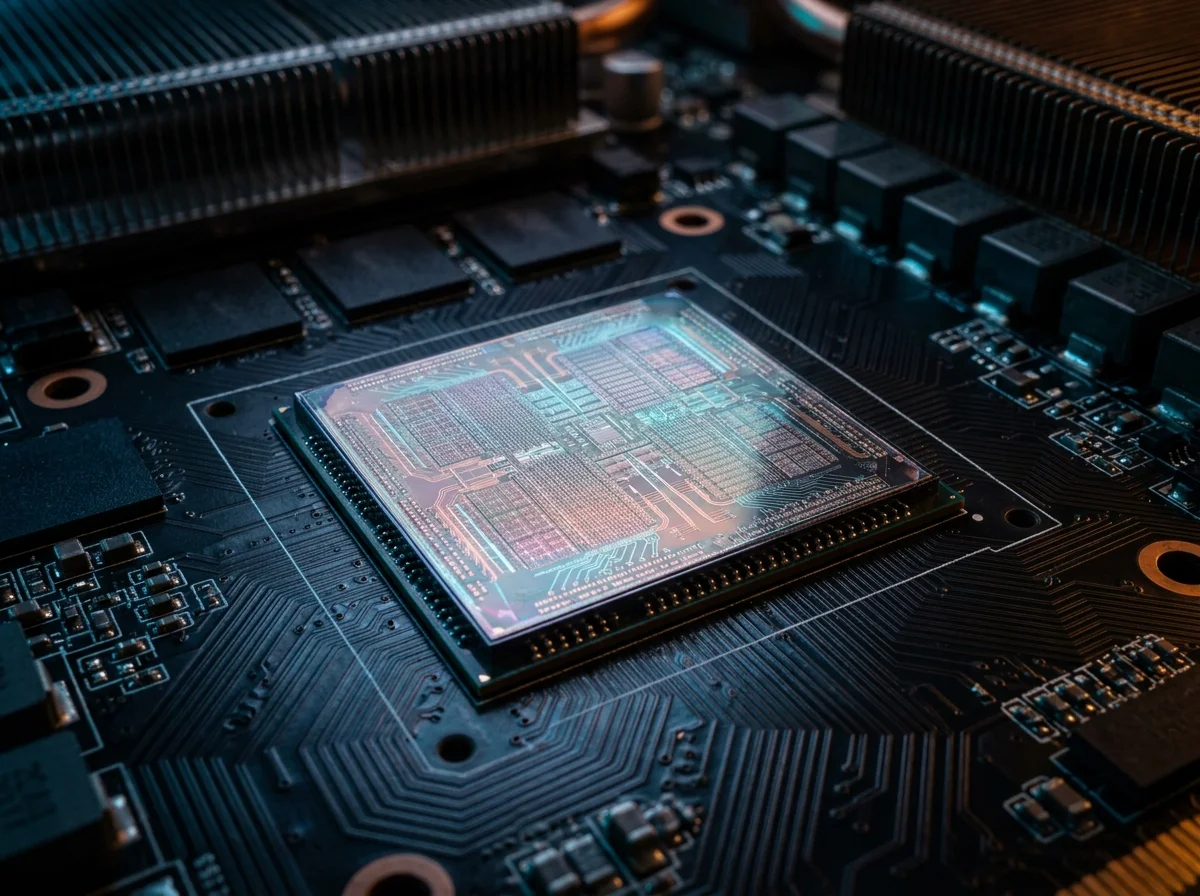
Anyone who has tried building or upgrading a gaming PC recently has likely experienced that sharp, hollow pang of disbelief when browsing online hardware retailers. A few generations ago, setting aside a modest budget of four hundred to five hundred dollars practically guaranteed a solid, upper-tier graphics card capable of driving every newly released AAA title with silky-smooth frame rates. Today, flagship desktop GPUs routinely command price tags north of eighteen hundred dollars, with certain custom liquid-cooled variants pushing past two thousand dollars. The sticker shock is not an accidental market blip: expensive graphics cards have ceased to be a temporary supply chain crisis and have solidified into the structural, permanent reality of modern consumer technology.
Gaming forums and hardware subreddits are overflowing with bitter nostalgia and legitimate frustration. Veteran PC builders look back fondly at legendary price-to-performance champions, pointing fingers at corporate greed and inflated retailer margins. Yet beneath the justified anger lies an inescapable economic truth that goes far beyond PC gaming. What happened to the GPU market over the past two years is arguably one of the most consequential industrial shifts of the century: the silicon component originally designed to render lighting shaders and realistic smoke in Counter-Strike and Cyberpunk has transformed overnight into the most prized, heavily contested digital asset on planet Earth.
The Day Gaming Silicon Became the New Crude Oil of Global Tech
To grasp how consumer hardware climbed to such dizzying heights, one has to look beneath the heatsinks at the foundational architecture of silicon. For decades, the central processing unit (CPU) reigned undisputed as the intellectual brain of personal computing. CPUs are brilliant masters of linear logic: they execute complex instructions sequentially with blistering single-thread speed. In contrast, graphics processing units (GPUs) evolved with a radically different architectural philosophy. To calculate millions of microscopic textured polygons across a 4K display at a hundred and twenty frames per second, a GPU must perform thousands of remarkably simple mathematical operations simultaneously, in parallel.
For years, enterprise IT departments treated that massive parallel horsepower with gentle indifference, regarding graphics cards as niche toys for gamers and Hollywood 3D rendering studios. The historic turning point arrived when computer science researchers stumbled onto a transformative mathematical realization: the dense matrix multiplication required to calculate volumetric lighting in video games is mathematically identical to the tensor mathematics required to train and run deep neural networks. Artificial intelligence models—from ChatGPT and Claude to multimodal computer vision systems—do not require sequential reasoning; they demand trillions of parallel floating-point multiplications executed within the same fraction of a millisecond.
NVIDIA and its visionary CEO, Jensen Huang, foresaw this convergence long before the rest of the semiconductor industry took notice. By investing billions of dollars into its proprietary CUDA software ecosystem starting all the way back in 2006, the company quietly engineered an impenetrable corporate moat. When the generative AI boom erupted across enterprise tech, every Fortune 500 company, hyperscaler, and sovereign government arrived at NVIDIA’s doorstep with blank checks. Silicon that once entertained gamers became the critical bedrock of global computational supremacy, sparking an unprecedented race over digital infrastructure and computational sovereignty across continents.

The Cold Calculus of Wall Street: Why Desktop Gamers Became Second-Class Customers
Step for a moment into the boardroom of a semiconductor giant reviewing quarterly manufacturing allocations. Producing a flagship consumer graphics card like an RTX 4080 or RTX 4090 requires a massive chunk of pristine leading-edge silicon, high-speed GDDR6X memory chips, custom multi-phase power delivery printed circuit boards, heavy vapor-chamber heatsinks, cooling fans, and colorful retail packaging. The manufacturer must then distribute those cards through retail channels, manage warranty claims, and provide software driver updates for millions of demanding individual gamers. The retail price hovers between twelve hundred and two thousand dollars, yielding gross margins that Wall Street considers healthy, but decidedly modest.
Now turn your gaze to the opposite end of the exact same semiconductor fabrication cleanroom. If you take that exact same quantity of cutting-edge silicon and allocate it toward an enterprise AI accelerator—such as an NVIDIA H100, H200, or the next-generation Blackwell B200 platform—the resulting product never touches a retail shelf. It ships in tightly sealed enterprise server racks directly to the climate-controlled data centers of Microsoft Azure, Amazon AWS, Google Cloud, and Meta. Each of these industrial accelerators commands an astonishing thirty-five to forty-five thousand dollars per unit, delivering estimated gross profit margins of nearly eighty percent.
“When you possess a strictly finite quota of advanced silicon packaging capacity in Taiwan and can choose between making two thousand dollars from a desktop gamer or thirty-five thousand dollars from an AI hyperscaler, the corporate economic decision is already cemented before the sun rises.”
Jon Peddie Research Silicon Market Analysis
According to comprehensive tracking studies published by Jon Peddie Research, enterprise data center compute has eclipsed desktop gaming to become the overwhelmingly dominant revenue engine for top-tier chip designers. This is not out of malice or spite toward the PC gaming enthusiast base that faithfully built these brands over thirty years of LAN parties and graphics benchmarks; it is the ruthless, unavoidable mathematics of global capital allocation.
The Invisible Chokepoint in Taiwan: Why Building More Fabs Isn’t a Quick Fix
Whenever consumer hardware faces prolonged shortages and soaring prices, mainstream observers instinctively raise the obvious question: if global demand is breaking every historical record, why don’t semiconductor manufacturers simply build more factories and ramp up production to satisfy everyone? The answer to that puzzle lies on a narrow island off the coast of East Asia, anchored to one of the most fragile and technologically demanding supply chains ever conceived by modern civilization.
Virtually all advanced graphics processors and high-performance computing silicon on the planet are fabricated in Hsinchu and Tainan by TSMC (Taiwan Semiconductor Manufacturing Company). Building a state-of-the-art semiconductor fabrication facility (or ‘fab’) is not a routine construction project: each facility requires over twenty billion dollars in capital investment, takes four to five years to achieve volume production, maintains cleanroom environments thousands of times purer than a hospital operating theater, and relies entirely on bespoke extreme ultraviolet (EUV) lithography scanners built exclusively by a single Dutch engineering firm, ASML.

Yet even when TSMC operates its multi-billion-dollar lithography lines at maximum wafer capacity, an even narrower bottleneck strangles global production: advanced semiconductor packaging, known industrially as CoWoS (Chip-on-Wafer-on-Substrate). Enterprise AI processors cannot function with traditional surface mounting; they demand that the central compute die be seamlessly fused on an interposer alongside stacked vertical pillars of ultra-dense High Bandwidth Memory (HBM3e and upcoming HBM4). This microscopic stacking process has severe physical capacity constraints inside the specialized cleanrooms of TSMC advanced foundries.
When consumer giants like Apple lock down massive wafer allocations to feed hundreds of millions of iPhone and MacBook chips, and NVIDIA snaps up every available square millimeter of CoWoS packaging capacity to train next-generation frontier artificial intelligence models, there is virtually zero physical slack left in the manufacturing line to stamp out millions of extra desktop gaming graphics cards. Consumer desktop GPUs are left to compete for whatever manufacturing scraps survive at the margins of an overstretched industrial machine.
The Cost Burden on Players: Inflation, Tariffs, and the Death of the Budget Tier
While the macroeconomic crunch is felt globally, the everyday consumer experiences it as an erosion of purchasing power. The most tragic casualty of this supply reallocation has been the systematic death of the honest budget graphics card. Ten years ago, a student or entry-level worker could assemble two hundred dollars and take home legendary performers like the GeForce GTX 750 Ti, GTX 960, or GTX 1060 6GB—cards that made zero pretensions about native 4K ray tracing, but consistently delivered rock-solid 1080p performance across every blockbuster release.
Today, the retail entry floor for a brand-new desktop graphics card has crept past three hundred and fifty dollars, and what consumers receive in exchange is frequently a heavily compromised product. Modern entry-tier GPUs arrive burdened by narrow memory bus widths and meager 8GB VRAM pools—allocations that actively struggle to buffer high-resolution textures in contemporary Unreal Engine 5 titles without stuttering or violent frame drops, accelerating consumer obsolescence.
Gaming Pays the Price: How Neural Upscaling Masked Stagnant Hardware Gains
Faced with hardware that was rapidly pricing out the median player, the video game development industry found itself staring into an existential abyss. How do studio executives greenlight two-hundred-million-dollar cinematic productions built on photorealistic Unreal Engine 5 rendering pipelines when fewer than five percent of PC gamers own machines capable of running the raw code natively?
The industry’s collective solution was a sweeping paradigm shift away from brute-force silicon computing toward neural image reconstruction. This is precisely why technologies like NVIDIA DLSS (Deep Learning Super Sampling), AMD FSR, and Intel XeSS went from clever marketing experiments to obligatory baseline requirements in modern PC game settings.
The underlying engineering is both ingenious and subtly troubling: rather than rendering a game at your display’s native resolution, the GPU renders the scene internally at a fraction of that pixel count (such as 720p or 1080p), dramatically lowering compute overhead. A trained deep learning model then interpolates and hallucinates the missing spatial detail, projecting a sharp reconstructed 1440p or 4K frame onto your monitor. With the advent of Frame Generation, neural networks now synthesize entirely fake interstitial frames between two genuinely rendered engine frames.
While the resulting visuals can look astonishingly crisp, the cultural side effect on game development has been undeniably toxic. Numerous major development houses have visibly relaxed their discipline regarding low-level memory and shader optimization, publishing unpolished PC ports that flatly refuse to maintain sixty frames per second without upscalers engaged. In essence, gamers are paying unprecedented sums for high-end hardware, only to spend half their gaming time looking at synthetic pixels generated by neural guess work.
Where Do PC Gamers Go From Here? Three Practical Paths Forward
Accepting the new geopolitical reality that AI data centers will continue to monopolize cutting-edge silicon allows hardware enthusiasts to abandon wishful thinking and adopt pragmatic strategies. Rather than waiting for budget cards to magically return to 2016 pricing, savvy PC gamers are navigating the market through three realistic pathways:
1. Master in-game optimization and extend your current hardware’s lifespan: Official metrics published by the Steam Hardware Survey reveal that the vast majority of active gamers worldwide continue to run older mid-range GPUs, such as the GTX 1650, RTX 2060, and RTX 3060. Lowering volumetric fog and shadow resolution by a single notch—settings that are practically imperceptible during fast-paced gameplay—can immediately restore fifteen to twenty-five frames per second, extending the practical life of an existing build by years.
2. Cloud Gaming as a legitimate financial refuge: Cloud streaming platforms, notably GeForce NOW and Xbox Cloud Gaming, have matured well beyond experimental novelties. For an affordable monthly subscription that represents a microscopic fraction of a new GPU’s cost, players can stream demanding AAA titles powered by remote RTX 4080-class server nodes directly to a budget laptop, smart television, or modest office monitor, bypassing hardware depreciation and thermal management entirely.
3. The curated secondhand hardware market: With the definitive collapse of proof-of-work cryptocurrency mining, the secondhand market is far safer than it was during the 2021 mining craze. Solid previous-generation workhorses equipped with 12GB or 16GB of VRAM—such as the RTX 3070 and Radeon RX 6700 XT—frequently trade hands on enthusiast forums and marketplaces at fair valuations. Demanding thermal stress benchmarks before purchasing remains one of the sharpest ways to play modern titles locally without emptying your savings.
Frequently Asked Questions About GPU Prices and the AI Boom
Will gaming graphics card prices ever drop back to historical pre-2020 levels?
It is overwhelmingly unlikely that consumer desktop GPUs will ever return to the price brackets seen in 2016 or 2018. As advanced semiconductor fabrication below 3 nanometers becomes exponentially more capital-intensive, TSMC and foundry partners will consistently prioritize high-margin enterprise AI silicon over consumer gaming dies. The current pricing landscape represents a permanent structural realignment of the entire global silicon economy.
Is it safe to buy a used graphics card in 2026?
Yes, provided you exercise basic due diligence. Unlike the peak of the Ethereum mining boom in 2021, the likelihood of purchasing a GPU that suffered continuous 24/7 memory thermal degradation in an open-air mining rig is dramatically lower today. Look for reputable sellers who can provide live video proof of thermal stress tests using benchmarks like 3DMark Time Spy or FurMark, ensuring fan bearings and thermal pads are in prime condition.
Are 8GB graphics cards still worth buying today?
Only for players who strictly play lightweight esports titles or target 1080p resolution on moderate visual settings. Contemporary blockbuster releases built on Unreal Engine 5 routinely buffer between 9GB and 11GB of VRAM at native resolutions, even without Ray Tracing engaged. Investing in a card equipped with at least 12GB of VRAM provides vastly superior longevity and eliminates catastrophic frame hitching in modern releases.
Is it smarter to save up for a dedicated GPU or subscribe to Cloud Gaming?
If you possess a reliable, low-latency broadband internet connection (50 Mbps or higher) and game casually for a few hours per week, Cloud Gaming is objectively superior from a financial standpoint. The capital saved by skipping a twelve-hundred-dollar GPU easily covers years of premium cloud subscriptions without electricity overhead, heat output, or obsolescence anxiety.
The transformation of silicon into the primary currency of geopolitical power has permanently altered the landscape of personal computing. The romantic era of building an enthusiast gaming rig out of casual summer savings has given way to an industrial ecosystem dominated by Wall Street balance sheets and hyperscale artificial intelligence laboratories. For those of us who love technology, our greatest asset remains practical intelligence: optimizing what we already own, embracing smart alternatives, and refusing to participate in planned obsolescence at extortionate price tags.
How has the GPU price surge impacted your setup? What was the last graphics card you bought, and what do you consider a reasonable ceiling to pay for PC hardware today? Drop your thoughts in the comments below—let’s grab a coffee and talk tech!