


The message arrives via LinkedIn: an executive recruiter from an international enterprise compliments your career portfolio and invites you to apply for an exclusive remote role offering an attractive USD compensation package. Her profile appears impeccably professional, featuring a crisp corporate headshot, verified credentials, and hundreds of mutual industry connections. Two days later, you join a brisk 10-minute screening call over Google Meet. The woman on screen smiles warmly, asks pointed questions about your technical background, and confirms you have advanced to the final offer stage. Everything feels seamless—until you notice her gaze never shifts, her eyelids barely flutter, and her vocal pauses lack the organic cadence of human respiration. Without realizing it, you have walked straight into the treacherous world of AI job scams.
Job hunting and career transitions are inherently exhausting experiences. Candidates navigate emotional fatigue, financial uncertainty, and the urgent pressure to secure sustainable employment. International cyber syndicates have systematically weaponized this vulnerability into an industrialized pipeline of digital fraud. Far removed from the archaic phishing emails of the past riddled with glaring grammatical typos, the current generation of employment fraud harnesses frontier language models, hyper-realistic video avatars, and neural voice synthesis to fabricate entire corporate subsidiaries out of thin air.
How AI Job Scams Operate Across LinkedIn and Messaging Channels
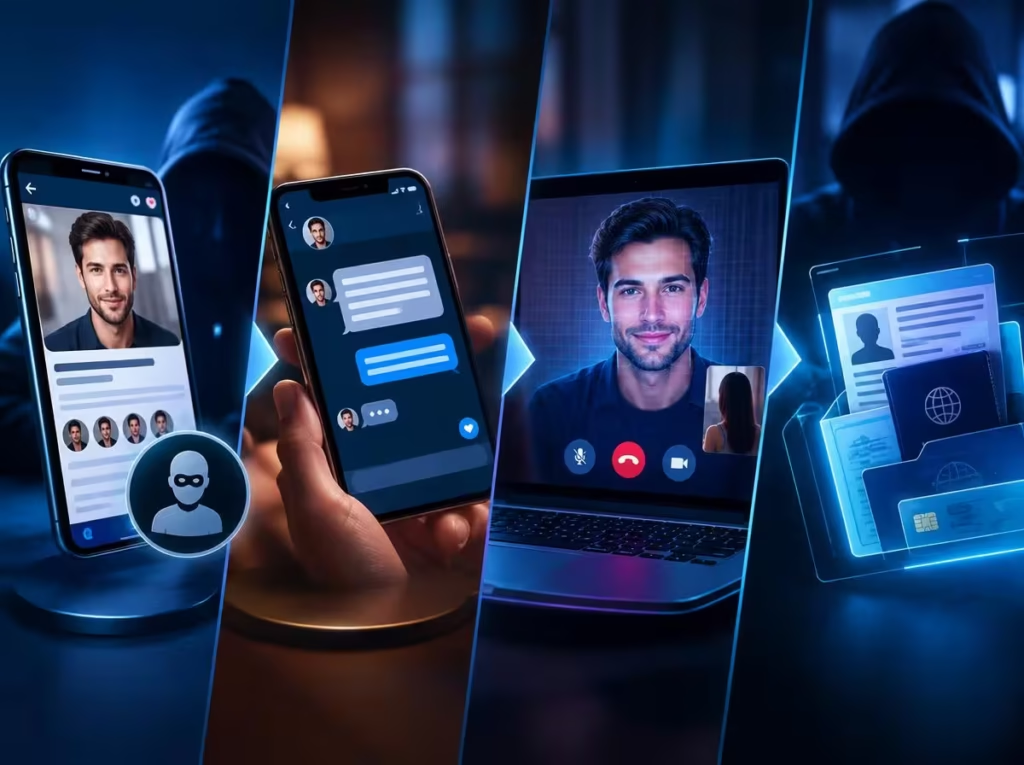
The mechanics of modern employment fraud no longer rely on solitary scammers manually hammering out messages. Today’s operations run on automated agentic workflows capable of targeting thousands of applicants simultaneously. The typical exploit sequence follows a calculated four-stage script:
- Engineering the Flawless Recruiter Persona: Threat actors generate synthetic profile photos using diffusion models, creating faces that do not exist in the physical world and bypassing standard reverse-image lookups. Profiles are populated across LinkedIn and job aggregators with fabricated employment histories at reputable tech conglomerates, automated updates, and bot-driven engagement rings that simulate authentic credibility.
- Hyper-Personalized Mass Inbound Outreach: Powered by LLMs designed to author persuasive personalized communications, automated bots ingest public profiles of active job seekers. The initial message is meticulously tailored: it references specific achievements from your portfolio, adopts exact industry jargon, and pitches an attractive salary band that sits comfortably above market rates without appearing cartoonishly high.
- The Synthetic Avatar Video Interview: To dismantle natural suspicion, scammers schedule a brief video conference. On camera, an interactive avatar animates in real time, with lip movements synchronized to neural speech synthesis that replicates human conversational cadence—complete with subtle pauses, friendly chuckles, and thoughtful vocal inflections.
- The Sting: Exfiltration and Bogus Skills Tests: Once psychological rapport is established, the candidate is congratulated on passing the initial screen and directed toward the final payload phase.
The 3 Most Dangerous Traps: What Scammers Actually Want
Contrary to popular assumption, employment fraudsters rarely demand an immediate upfront wire transfer. Modern syndicates diversify their monetization across three sophisticated attack vectors:
1. Full Synthetic Identity Theft for Banking Exploits
Under the pretext of “HR compliance onboarding,” “background check clearance,” or “preliminary employment agreements,” the fake hiring manager supplies a secure portal requesting high-resolution photocopies of government identification, Social Security numbers, proof of residency, and a selfie holding the document. Armed with this comprehensive identity package, criminal rings open fraudulent digital banking accounts, initiate loans, and order credit lines in the victim’s name.
2. Trojanized Technical Assessments (Infostealers)
This vector specifically targets software engineers, graphic designers, copywriters, and data scientists. Fake HR representatives provide a link to a “practical coding challenge” or “case study archive” hosted on GitHub, Google Drive, or inside password-protected ZIP archives. When candidates unpack and execute the project files, they inadvertently deploy an infostealer—a stealth trojan that harvests saved browser passwords, session tokens, corporate VPN credentials, and cryptocurrency keys.
3. Equipment Stipend and Home Office Fee Fraud
The candidate is informed they have been selected and that the firm provides an enterprise MacBook Pro, 4K monitors, and ergonomic workstation gear. However, to clear logistics shipping, the worker is instructed to pay an “expedited customs bond” or purchase a “mandated security certificate” through a designated vendor link, with the promise that 100% of the expense will be reimbursed on the first payroll cycle. Naturally, neither the workstation hardware nor the reimbursement ever materializes.
Red Flags: How to Spot a Synthetic AI Recruiter

Despite rapid advances in generative media, synthetic video avatars and fabricated recruiting scripts leave distinct technical footprints when scrutinized with an observant eye. Watch for these telling markers during screening stages:
- Text-Only Chats or Excuses to Avoid Real Video: Fraudsters frequently manufacture technical excuses: “My webcam driver crashed, let’s conduct the technical evaluation over Telegram or Microsoft Teams chat.” This is an immediate warning sign that no legitimate corporate HR team is present.
- Rushed Hiring Velocity and Vague Evaluations: Legitimate hiring processes involve thorough multi-round interviews with functional team leads. If a company appears extraordinarily eager to extend an unconditional offer without asking substantive questions about past project hurdles, exercise intense skepticism.
- Unverified Email Domains and Unofficial Portals: Official corporate communications originate from verified company domains (e.g.,
@enterprise.com) rather than generic webmail services (Gmail, Outlook) or hastily registered lookalike domains featuring slight character variations.
The Federal Bureau of Investigation (FBI IC3) and consumer protection authorities like the Federal Trade Commission (FTC) have issued global warnings emphasizing that AI-generated avatars and voice cloning in remote interview processes represent one of the fastest-growing social engineering threats in modern employment markets.
Action Plan: What to Do If You Suspect an Employment Scam
If you encounter a suspicious job opportunity or realize you recently transmitted personal details to fraudulent parties, take immediate defensive measures:
- Sever All Communications Immediately: Do not attempt to confront or debate the scammer. Block the contact across all platforms, preserve screenshots of chat logs and URLs, and flag the malicious profile directly to LinkedIn trust and safety teams.
- Place a Credit Freeze on Your Bureau Records: Immediately contact major credit reporting agencies (such as Equifax, Experian, and TransUnion) to freeze your credit files. This prevents unauthorized institutions from opening financial accounts in your name.
- File an Official Complaint with Cyber Authorities: Submit a detailed incident report to the FBI’s Internet Crime Complaint Center (IC3.gov) or your national cybercrime portal. Official reports provide essential legal documentation if your credentials are subsequently exploited in secondary fraud.
- Isolate and Sanitize Your Workstation: If you downloaded unvetted skills assessments, ZIP files, or installation packages, disconnect the machine from your home network immediately. Update critical account credentials from a clean mobile device, and format the machine’s storage to purge stealth infostealers. As discussed in our overview of prompt injection and stealth digital exploits, software containment is the only reliable remedy once malicious payloads enter your environment.
Frequently Asked Questions (FAQ)
Is it standard practice to submit identity documents early in hiring?
No. Reputable employers never require government ID photocopies, banking credentials, or tax forms during initial screening rounds. Official identification documents are collected strictly after a formal, mutually signed written offer letter has been executed through verified enterprise HR portals.
How can I independently verify whether a LinkedIn listing is real?
Never rely solely on unsolicited private messages. Open a separate browser tab, navigate directly to the hiring company’s official website, and locate their dedicated “Careers” page. Verify whether the requisition ID exists, and reach out directly to verified departmental managers on LinkedIn to confirm active recruitment.
Why do cybercriminals disproportionately target remote roles?
Remote arrangements provide built-in justification for never visiting a physical office, meeting coworkers face-to-face, or handling physical paperwork—making it significantly easier to deploy synthetic video avatars and disguise shell operations from afar.
Vigilance Is Your Strongest Professional Shield
Artificial intelligence holds immense promise for career acceleration and technical productivity, but it has simultaneously placed cinematic-grade deception tools in the hands of malicious operators. The key to navigating the modern remote landscape is not debilitating skepticism, but active digital hygiene: independently verifying outreach sources, guarding confidential documents, and remembering that authentic employers will never charge you for the privilege of working.
Have you encountered suspicious recruiter messages or unusually rushed interviews on LinkedIn recently? What raised your suspicions? Share your experience in the comments below to help fellow professionals stay vigilant!