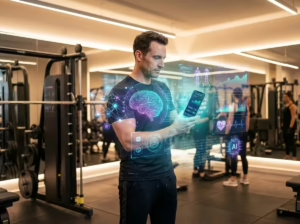

In the relentless sprint of foundation model development, the technological horizon moves at dizzying speed. Just as enterprises and everyday users adjusted to conversational chatbots and multimodal vision inputs, the frontier research labs in San Francisco and London are preparing the next seismic paradigm shift: GPT-6 Astra. Codenamed to represent starry aspirations of autonomy, this next generation is not merely another incremental benchmark bump—it marks the official transition from passive conversational bots to fully autonomous agentic intelligence.
For the past four years, human users operated as the mechanical bridge between intent and digital execution: we prompted a chatbot, copied its text, pasted it into an email client, manually clicked through flight booking sites, and downloaded spreadsheets. GPT-6 Astra represents the collapse of that friction: an architectural leap where the model directly perceives screens, clicks interfaces, and executes complex multi-step real-world workflows without requiring constant human hand-holding.

1. From Passive Responses to Real-World Action (Computer Use)
The defining architectural milestone of GPT-6 Astra is native Computer Use. Rather than being confined to API endpoints and text chat boxes, the agent observes the user’s operating system interface like a human operator: identifying buttons, reading PDF invoices, filling out dynamic browser forms, and handling unexpected authentication prompts.
If you instruct Astra: “Find the lowest flight to Lisbon next Thursday, check my Google Calendar for meeting conflicts, book the window seat with my corporate card, and notify my travel team on Slack,” the agent navigates the multi-tab web workflow autonomously. As we analyzed in our previous coverage of ChatGPT as an Operating System, graphical user interfaces are no longer human barriers—they are playgrounds for autonomous agents.
2. Zero-Latency Multimodal Fusion & Continuous Video Streams
Current multimodal models operate on discrete snapshot frames: you upload a single photo, wait two seconds, and receive a text reply. GPT-6 Astra is engineered for continuous real-time sensory ingestion. Processing high-frame-rate video and spatial audio at sub-150ms latencies, the model perceives environmental context dynamically through smartphone cameras, smart glasses, and ambient microphones.
According to research benchmarks published by OpenAI Research, low-latency sensory fusion allows the system to interrupt itself when human users speak, register facial expressions of confusion, and adapt its explanations in real time—mirroring the fluid rhythm of natural human collaboration.
3. The End of Screens as Monolithic Intermediaries
For forty years, human-computer interaction required clicking mice, tapping glass rectangles, and navigating nested folders. With GPT-6 Astra, computing becomes ambient. Instead of opening five software applications to reconcile your monthly business finances, you speak your intention to an ambient pin or desktop sidecar, and the agent orchestrates the database updates invisibly in the background.
This ambient shift changes everyday productivity. Tasks that once required an entire afternoon of mechanical administration—like setting up automated project boards, which we explored in our guide on Unstuck with AI: The 5-Step Execution System—occur continuously through background agentic threads.
4. Architectural Breakthroughs: Test-Time Compute & Verification
How does GPT-6 Astra prevent the catastrophic hallucinations that plagued earlier models? The technical leap relies on Test-Time Compute scaling and automated mathematical verification. When presented with an intricate coding puzzle, legal contract clause, or scientific hypothesis, the model pauses, generates a tree of possible reasoning paths, runs self-verification sandboxes, and critiques its own logic before surfacing an answer.
| Feature Dimension | ChatGPT (GPT-4o Era) | GPT-6 Astra Era |
|---|---|---|
| Primary Interaction | Text prompt & single-image upload | Continuous video, audio, and OS screen streaming |
| Operational Autonomy | Passive conversational suggestions | Autonomous multi-hour computer use & workflow execution |
| Latency Floor | 800ms – 2,500ms | Sub-150ms conversational reflex latency |
| Reasoning Mechanism | Single-shot next-token prediction | Test-time compute search & verifiable self-critique |
| Memory & Context | 128k context window with reset sessions | Persistent agentic memory across apps and devices |
The Custom Silicon Race: Moving Beyond Nvidia GPU Monopoly
Serving continuous real-time video streams and persistent agentic loops to hundreds of millions of users creates an astronomical inferencing bottleneck. Traditional off-the-shelf GPU clusters consume too much power and suffer from memory bandwidth throttling. To power GPT-6 Astra at global scale, foundation labs are shifting toward custom proprietary ASICs (Application-Specific Integrated Circuits) with optical interconnects.
By co-designing silicon specifically for transformer attention layers and test-time verification, compute energy costs per token can drop by up to 70%. This silicon sovereignty race ensures that autonomous agents can run continuously in the background without bankrupting the platforms hosting them.
The Agentic Security Protocol: Guarding Autonomous System Access
Granting an AI agent direct control over your operating system cursor, browser cookies, and local file storage is an enormous cybersecurity risk. If an agent visits an adversarial webpage containing invisible prompt injection commands, the rogue text could instruct the agent to exfiltrate session tokens or initiate wire transfers.
To prevent autonomous hijacking, GPT-6 Astra implements a strict Dual-Brain Security Architecture: a primary creative execution model operates in an isolated virtual sandbox, while an un-hackable, lightweight supervisor model monitors system calls, requiring explicit biometric hardware confirmation before executing irreversible financial transactions or permanent file deletions.
5. Urgent Dilemmas: Privacy, Energy & Algorithmic Alignment
With great autonomous capability comes unprecedented systemic friction. Deploying agents with autonomous computer control introduces critical questions:
- Data Sovereignty & Local Privacy: If an agent monitors your screen continuously to help with daily tasks, ensuring that confidential passwords and financial spreadsheets never leak to remote cloud training clusters is an existential imperative.
- Gigawatt Data Center Infrastructure: Running continuous multimodal reasoning requires staggering amounts of electrical power and specialized silicon, accelerating the race between Big Tech and global energy grids.
- Prompt Injection & Autonomous Hijacking: If an agent browses the web on your behalf, malicious websites containing invisible prompt injection code could trick the agent into executing unauthorized transactions or leaking credentials.
Frequently Asked Questions
When will GPT-6 Astra be released to the general public?
Frontier models of this scale undergo six to nine months of rigorous red-teaming, safety evaluations, and government AI safety institute audits. Initial enterprise previews and developer beta rollouts are anticipated through 2026 and 2027.
Will I need new hardware to run GPT-6 Astra?
No. While heavy inference runs on massive cloud server clusters, the client interface runs through standard web browsers, mobile apps, or lightweight smart glass companions via optimized streaming protocols.
How does GPT-6 Astra compare to Claude 3.5 Sonnet and Gemini?
While Anthropic pioneered early computer use in Claude, and Google integrates deep native multimodality in Gemini, GPT-6 Astra aims to unify ultra-low latency, full OS execution, and verifier-guided reasoning into a single consumer operating layer.
Preparing for the Era of Autonomous Synthetic Agency
We stand at the threshold of the most consequential transition in software history. When software stops waiting for our instructions and begins proactively fulfilling our intentions, the boundaries of personal productivity, business scale, and digital life will be rewritten. How do you feel about autonomous AI agents operating your computer? Share your hopes, concerns, and predictions in the comments below!