
When analyzing the future of artificial intelligence, it is remarkably easy to get swept away by sheer scale: trillions of model parameters, clusters with tens of thousands of GPUs, autonomous agents outperforming benchmarks, and daily stock valuation records on Wall Street. The dominant tech narrative suggests that computing progresses along a smooth, unshakeable trajectory detached from the physical world. Yet technology never develops in a vacuum: it collides head-on with human biology, planetary resources, and the fragile plumbing of global finance.
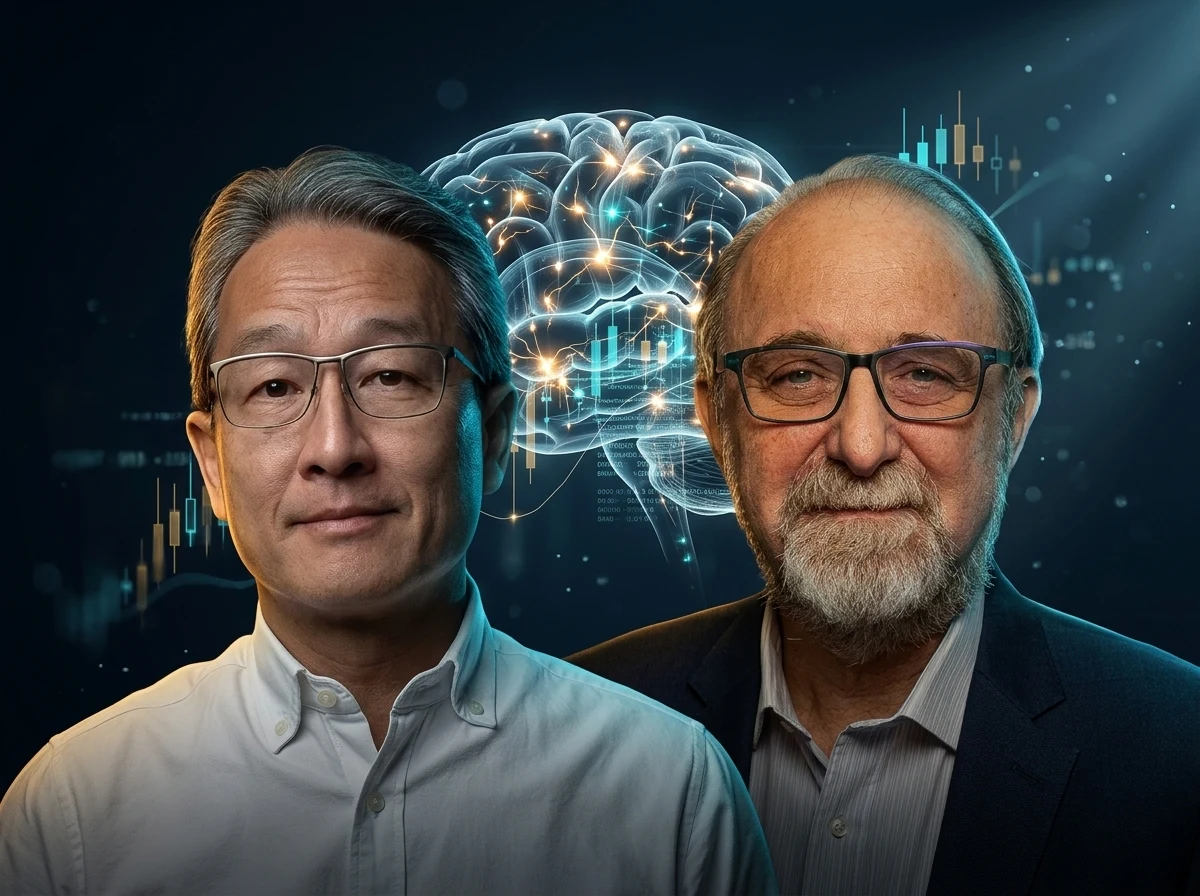
This critical crossroads was the focus of an extraordinary intellectual exchange: the dialogue between José Kobori (leading financial and investment analyst) and Professor Miguel Nicolelis (global pioneer in brain-machine interfaces and neuroengineering) on Episode #484 of the Kritikê Podcast (streamed live on January 22, 2026), titled ‘The Brain Needs a Story’.
Stripping away the techno-optimistic hype of Silicon Valley, this meeting combined rigorous economic cycle analysis with four decades of frontier brain research. The resulting dialogue delivers an urgent message on neuroscience and AI: how cognitive offloading quietly reshapes brain architecture, why digitized money harbors systemic fragility, and why the ultimate contest of the 21st century will not be software against software, but biological neurotechnology against silicon algorithms.
The Crisis of Abstractions and the Fragility of a Purely Digital World
Over the past months, macroeconomic observers noticed a startling pattern: simultaneous all-time highs across gold, silver, strategic commodities, and big-tech equities. While equity markets celebrate this liquidity wave as endless technological progress, Kobori and Nicolelis diagnose something far more troubling: a crisis of abstraction and a dangerous divergence from real physical production.
“Simultaneous historic highs across multiple asset classes point directly to the ‘everything bubble’ — a stark symptom of purchasing power dilution and an unprecedented disconnection from physical, productive reality.”
José Kobori and Miguel Nicolelis
This disconnect peaks in the hyper-digitization of money. The modern machine learning stack rests on an invisible physical foundation: undersea fiber cables, water-hungry data centers, cloud ledgers, and centralized banking settlement networks that we assume are invulnerable. At the intersection of neuroscience and AI, recognizing these physical constraints is essential. Nicolelis offered an alarming reminder about this blind dependency:
“Modern wealth has become a pure digital abstraction. Extreme planetary phenomena, such as a severe geomagnetic storm, have the physical potential to collapse communication networks and erase electronic records of ownership, leaving global society in unprecedented systemic chaos.”
Miguel Nicolelis
For developers and tech professionals, this perspective is sobering. If an electromagnetic event comparable to the 1859 Carrington Event occurred today, what would remain of cloud-hosted AI models, digital wallets, or algorithmic portfolios? By detaching value from tangible physical reality, we have magnified civilization’s systemic vulnerability. Capital and cognition cannot survive cut off from the physical world.
Neuroscience, Cognitive Atrophy, and the Algorithmic Brain
While corporate boardrooms debate whether generative agents will displace knowledge workers, neurobiology reveals a much faster, quieter transformation: the adaptive rewiring of human neural circuits driven by algorithmic convenience. Frontier research on neuroscience and AI reveals that offloading mental effort extracts a physical toll from biological tissue.
The human brain is our most metabolically expensive organ, burning roughly 20% of resting calories despite making up only 2% of total body mass. Shaped by evolution under harsh energy constraints, it follows a strict biological rule: use it or lose it. When a cognitive capability is no longer actively recruited, the brain prunes the underlying synaptic connections to conserve metabolic fuel.
Nicolelis highlighted our daily reliance on smartphone turn-by-turn navigation as a vivid case study:
“The continuous outsourcing of navigation to algorithmic GPS tools is actively restructuring how the brain processes physical space. By delegating pathfinding to an algorithm, we stop decoding environmental cues and allow our biological capacity for organic navigation to atrophy.”
Miguel Nicolelis
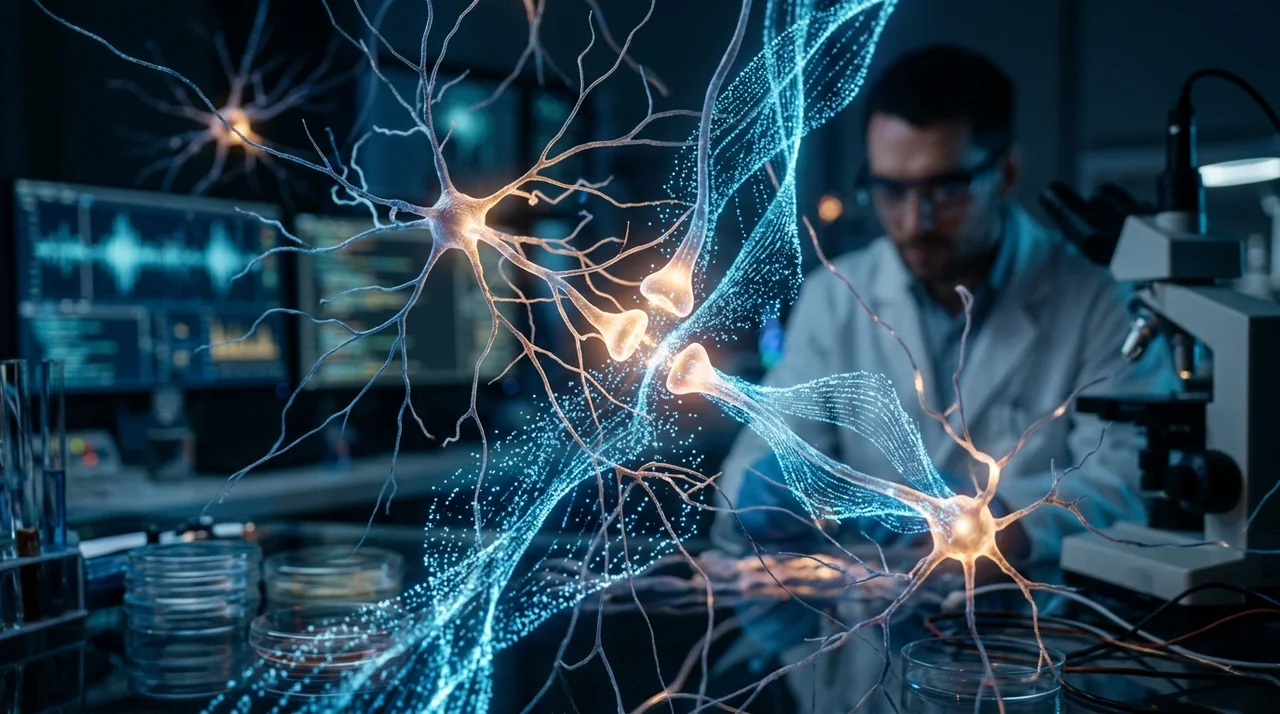
For those studying neuroscience and AI, Nicolelis’s warning is backed by decades of neuroimaging data. Landmark studies on London taxi drivers demonstrated that mastering ‘The Knowledge’ — 25,000 city streets — physically expanded the posterior hippocampus, the brain’s core for spatial mapping and memory consolidation. When a modern driver blindly obeys voice prompts from an app, that intense hippocampal stimulation vanishes.
The uncomfortable question extends to everyone using generative tools. If delegating turn-by-turn driving atrophies hippocampal structures, what happens to our capacity for deep reasoning, synthesis, and ethical judgment when we outsource analytical reading and writing to chatbots? When you skip the cognitive friction of framing a thesis, the neural muscle behind that capability shrinks. This is why building an active second brain with AI designed for retention and critical thought is essential rather than passive consumption.
Reason, Emotion, and Why AI Does Not ‘Think’ Like a Human Mind
One of the most persistent traps in modern tech discourse is anthropomorphism: our instinct to assign consciousness, subjective experience, and feelings to probabilistic language models. During the discussion, Nicolelis revisited the frameworks of neuroscientist António Damásio to dismantle this misconception and clarify why biological minds differ fundamentally from silicon processors.
“While acknowledging Damásio’s contributions, I dispute strictly modular, localizing views of the brain. The mind functions as an analog, distributed, and deeply integrated system: it is the biological and emotional foundation that generates and sustains human reasoning itself.”
Miguel Nicolelis
This distinction in neuroscience and AI is pivotal. Historically, mechanistic views treated the brain as modular software — logic in one box, emotion in another, speech in a third. Nicolelis stresses that the brain is an analog, organic system embedded in a living body. Human reason does not execute like an isolated mathematical function; it is guided, informed, and calibrated by visceral sensations, heart rate shifts, endocrine states, and lived emotional history.
A Large Language Model (LLM), regardless of fluency, is a high-dimensional statistical calculator. It predicts token sequences based on ingested training data. It feels no fear, no empathy, no moral conviction, and no mortality. Lacking the emotional and biological grounding that shapes authentic judgment, modern AI yields syntactically spotless output that remains existential void.
Geopolitics and the Grand Contest: Why Neurotechnology Will Outpace AI
The dialogue between Kobori and Nicolelis shifted to global scientific strategy, highlighting the stark contrast between Western and Eastern approaches to technological sovereignty. While Western venture capital poured trillions into short-term consumer apps, social feeds, and commercial text generation, Eastern superpowers directed massive capital into heavy infrastructure, clean power, and frontier neuroengineering.
“While the West concentrated immense capital on rapid digital monetization and consumer software, powers like China committed strategic, long-term funding toward neurotechnology and the fundamental sciences of life.”
José Kobori e Miguel Nicolelis
In this context, Nicolelis offered one of his boldest predictions: over the coming decades, brain-machine interfaces and neurotechnology will exert a far deeper civilizational, medical, and economic impact than generalized AI. Groundbreaking publications in brain-machine interface research by Professor Miguel Nicolelis prove the transformative potential of direct biological integration.
The underlying thesis is straightforward. Artificial intelligence, however advanced, remains an intermediary tool — something accessed through glass screens, microphones, optical sensors, or keyboards. Neurotechnology, conversely, operates directly on the substrate of conscious reality: restoring motor control in paralysis, enabling direct mind-to-machine communication, driving robotic exoskeletons, and treating neurodegenerative disease from within. While AI simulates human thought from the outside, neurotechnology connects to the wellspring of consciousness from the inside.
Education and Fundamental Science: The Non-Negotiable Pillars of Sovereignty
No nation can develop frontier computing, build advanced semiconductors, or lead biomedical innovation without an unshakeable educational foundation. Both Kobori and Nicolelis passionately denounced the persistent underfunding of primary education and scientific research in developing nations:
“Education cannot be managed as an expendable line item in national budgets; it is the core strategic project of sovereignty. Valuing teachers and funding fundamental science are the only pillars capable of sustaining long-term national development.”
José Kobori e Miguel Nicolelis
When governments treat teachers as budgetary overhead and slash basic science grants to meet quarterly fiscal targets, they condemn their citizens to being passive consumers of foreign technology. Nations worldwide must confront sovereign tech challenges, similar to those outlined in Brazil’s national AI sovereignty initiatives. Mastering science requires educating minds to inquire, hypothesize, and synthesize — skills mastered through active learning methods like the Feynman technique combined with AI, not scrolling endless vertical video feeds.
Watch the Full Debate: Neuroscience and AI with Miguel Nicolelis and José Kobori
To experience the full intellectual depth of this historic dialogue uncut, watch the original Kritikê Podcast livestream below. Across three hours of intense discussion, José Kobori and Professor Miguel Nicolelis explore the frontier of neuroscience and AI, financial vulnerabilities, and practical steps to preserve cognitive sovereignty:
Frequently Asked Questions on Neuroscience and AI: The Nicolelis-Kobori Debate
What is the fundamental difference between an AI neural network and the biological human brain?
Artificial neural networks in neuroscience and AI operate as deterministic mathematical functions that calculate matrix probabilities in silicon. The biological human brain is an analog, self-organizing organic system. Consuming just 20 watts of power compared to megawatts of data centers, the living brain weaves reason with visceral emotion, neurochemical states, and dynamic synaptic plasticity that software cannot replicate.
What is algorithmic cognitive atrophy, and how can we prevent it?
Algorithmic cognitive atrophy occurs when we habitually outsource fundamental mental tasks — such as spatial memory, logical reasoning, or analytical synthesis — to automated systems. Because biological neural circuits follow the ‘use it or lose it’ rule, underutilized pathways are biologically pruned. To prevent this, use AI as a Socratic thinking partner while dedicating disciplined time to deep reading, original writing, and independent problem-solving.
Why does Nicolelis argue that neurotechnology will be more transformative than AI?
Because artificial intelligence remains an external interface mediated by screens, text inputs, and speakers. Neurotechnology interfaces directly with the biological seat of consciousness. It has the clinical power to restore mobility to paralyzed patients, link biological minds to prosthetics, and treat neurodegenerative disorders from within, expanding biological capability.
How can individuals protect their data and assets from extreme digital fragility?
The debate emphasizes physical redundancy and diversification. In finance and data management, keeping offline archives and tangible assets insulated from digital blackouts is basic prudence. Cognitively, it means training skills and storing deep knowledge in your biological memory, ensuring you do not depend entirely on continuous cloud connectivity to think.
Final Reflection: The Human Brain Needs Its Own Story
The title of Kritikê Podcast #484 holds profound meaning: ‘The brain needs a story’. Over millions of years of evolution, humans did not dominate the planet by computing numbers faster than machines, but through our unmatched capacity to dream, build cultural mythologies, feel genuine empathy, and assign purpose to existence.
As we integrate discoveries in neuroscience and AI into modern work, our greatest civilizational test is not building faster chips or larger clusters, but remembering who we are. Algorithms can draft copy, map transit, and calculate probabilities. But living a story, feeling another person’s pain, and forging a self-determined destiny remains a profoundly human — and biological — superpower.
Have you noticed your personal focus or memory changing since adopting AI tools and mobile apps? Where do you see the boundary between technology and biology heading? Share your perspective in the comments below!